Asian Art
History of the Jews in Romania
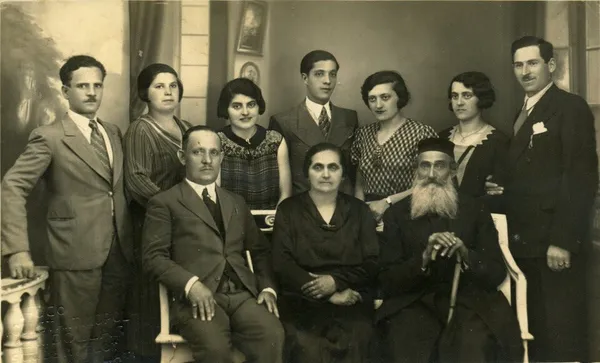
The history of the Jews in Romania concerns the Jews both of Romania and of Romanian origins, from their first mention on what is present-day Romanian territory. Minimal until the 18th century, the size of the Jewish population increased after around 1850, and more especially after the establishment of Greater Romania in the aftermath of World War I. A diverse community, albeit an overwhelmingly urban one, Jews were a target of religious persecution and racism in Romanian society from the late-19th century debate over the "Jewish Question" and the Jewish residents' right to citizenship, leading to the genocide carried out in the lands of Romania as part of the Holocaust. The latter, coupled with successive waves of emigration, including aliyah to Israel, has accounted for a dramatic decrease in the overall size of Romania's present-day Jewish community. During the reign of Peter the Lame (1574–1579), the Jews of Moldavia, mainly traders from Poland who were competing with locals, were taxed and ultimately expelled. The authorities decided in 1650 and 1741 that Jews had to wear clothing evidencing their status and ethnicity. The first blood libel in Moldavia (and, as such, in Romania) was made in 1710, when the Jews of Târgu Neamț were charged with having killed a Christian child for ritual purposes. An anti-Jewish riot occurred in Bucharest in the 1760s. During the Russo-Turkish War, 1768–1774, the Jews in the Danubian Principalities had to endure great hardships. Massacres and pillages were perpetrated in almost every town and village in the country. During the Greek War of Independence, which signalled the Wallachian uprising of 1821, Jews were victims of pogroms and persecutions. In the 1860s, there was another riot motivated by blood libel accusations. Antisemitism was officially enforced under the premierships of Ion Brătianu. During his first years in office (1875) Brătianu reinforced and applied old discrimination laws, insisting that Jews were not allowed to settle in the countryside (and relocating those that had done so), while declaring many Jewish urban inhabitants to be vagrants and expelling them from the country. The emigration of Romanian Jews on a larger scale commenced soon after 1878.
Also on this shelf
Board game.
Birendra of Nepal.
See also
Uncatalogued shelfText from Wikipedia; plate via Wikimedia Commons. Text CC BY-SA 4.0; plate freely licensed (see Commons). Source record. Images and catalogue data are reproduced from open-access collections.