Asian Art
Japanese war crimes
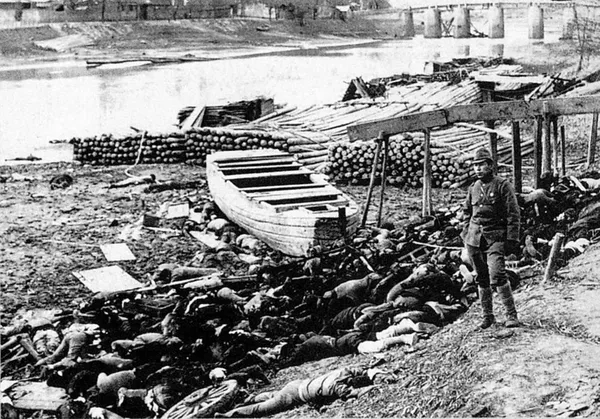
Both before and during World War II, the Empire of Japan committed numerous war crimes and crimes against humanity across various Asian–Pacific nations, most notably during the Second Sino-Japanese and Pacific Wars. These crimes have been referred to as "the Asian Holocaust" or "Japan's Holocaust", as well as the "Rape of Asia". Most of these crimes occurred during the early part of the reign of Emperor Hirohito. Deaths are estimated at between 19 million and 30 million. The Imperial Japanese Army (IJA) and the Imperial Japanese Navy (IJN) were responsible for war crimes which resulted in millions of deaths, ranging from sexual slavery and massacres to unethical human experimentation, torture, starvation and forced labour. Evidence of these crimes, including oral testimonies and written records such as diaries and war journals, has been provided by Japanese veterans. In many instances, the Japanese political and military leadership, knowing about the atrocities committed by their own troops, continued to either condone or, in some cases, even justify them. Most of the Japanese troops who were stationed in the Asia-Pacific region either took part in or did not oppose these crimes. The Air Service of the IJA participated in chemical and biological attacks on civilians during the Second Sino-Japanese War and World War II, violating international agreements that Japan had signed, including the Hague Conventions, which prohibited the use of "poison or poisoned weapons" in warfare. Since the 1950s, numerous apologies for the war crimes have been issued by senior Japanese government officials, which have been criticized by some as insincere. Japan's Ministry of Foreign Affairs has acknowledged the country's role in causing "tremendous damage and suffering" before and during World War II, particularly the massacre and rape of civilians in Nanjing by the IJA. However, the issue remains controversial, with some members of the Japanese government, including former prime ministers Junichiro Koizumi and Shinzō Abe, having paid respects at the Yasukuni Shrine, which honors all Japanese war dead, including convicted Class A war criminals.
Also on this shelf
French and British interregnum in the Dutch East Indies.
Fishkeeping.
See also
Uncatalogued shelfText from Wikipedia; plate via Wikimedia Commons. Text CC BY-SA 4.0; plate freely licensed (see Commons). Source record. Images and catalogue data are reproduced from open-access collections.