Asian Art
History of printing in East Asia
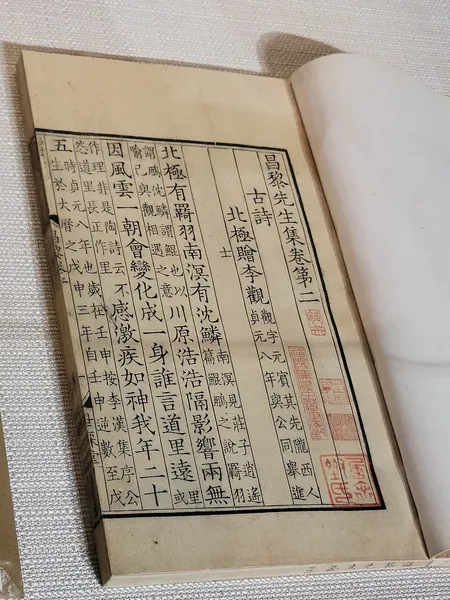
Printing in East Asia originated in China, evolving from ink rubbings made on paper or cloth from texts on stone tablets, used during the sixth century. A type of printing called mechanical woodblock printing on paper started in China during the 7th century in the Tang dynasty. The practice of woodblock printing soon spread throughout East Asia. As recorded in 1088 by Shen Kuo in his Dream Pool Essays, the Chinese artisan Bi Sheng invented an early form of movable type using clay and wood pieces arranged and organized for written Chinese characters. The earliest printed paper money with movable metal type to print the identifying code of the money was made in 1161 during the Song dynasty. In 1193, a book documented instructions on how to use the copper movable type. The use of metal movable type spread to Korea by the 13th century during the Goryeo period, with the world's oldest surviving printed book using moveable metal type being from 1377 in Korea. From the 17th century to the 19th century in Japan, woodblock prints called ukiyo-e were mass-produced, which influenced European Japonisme and the Impressionists. The printing press became known in East Asia by the 16th century but was not adopted. Centuries later, mechanical printing presses combining some European influences were adopted, but then was replaced with newer laser printing systems designed in the 20th and 21st centuries.
Also on this shelf
Culture of Thailand.
History of the Jews in Naples.
See also
Uncatalogued shelfText from Wikipedia; plate via Wikimedia Commons. Text CC BY-SA 4.0; plate freely licensed (see Commons). Source record. Images and catalogue data are reproduced from open-access collections.