Asian Art
Five Great Kilns
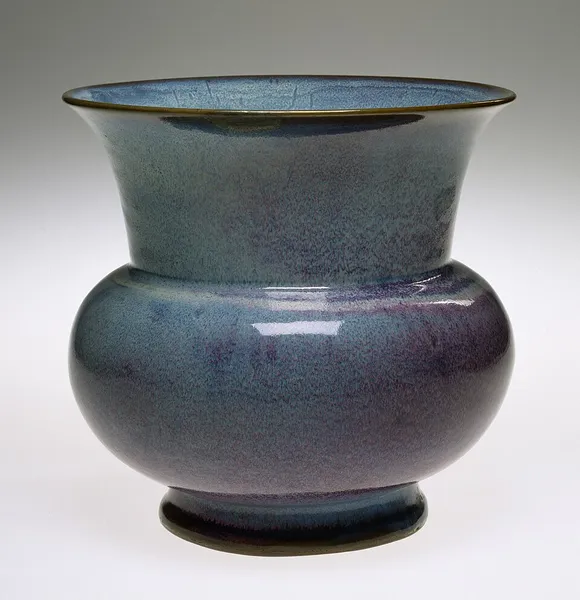
The Five Great Kilns (Chinese: 五大名窯; pinyin: Wǔ dàmíng yáo), also known as Five Famous Kilns, is a generic term for ceramic kilns or wares (in Chinese 窯; yáo can mean either) which produced Chinese ceramics during the Song dynasty (960–1279) that were later held in particularly high esteem. The group were only so called by much later writers, and of the five, only two (Ru and Guan) seem to have produced wares directly ordered by the Imperial court, though all can be of very high quality. All were imitated later, often with considerable success. All except Ding ware used celadon glazes, and in Western terms the celadon kilns are stoneware, as opposed to the Ding early porcelain. The celadons placed great emphasis on elegant forms and their ceramic glazes, and were otherwise lightly decorated, with no painting. The five kilns produced respectively: Ru ware (汝) Jun ware (钧) Guan ware (官) Ding ware (定) Ge ware (哥)
Also on this shelf
Ganesha in world religions.
Christianity in the 7th century.
See also
Uncatalogued shelfText from Wikipedia; plate via Wikimedia Commons. Text CC BY-SA 4.0; plate freely licensed (see Commons). Source record. Images and catalogue data are reproduced from open-access collections.