Asian Art
Alchon Huns
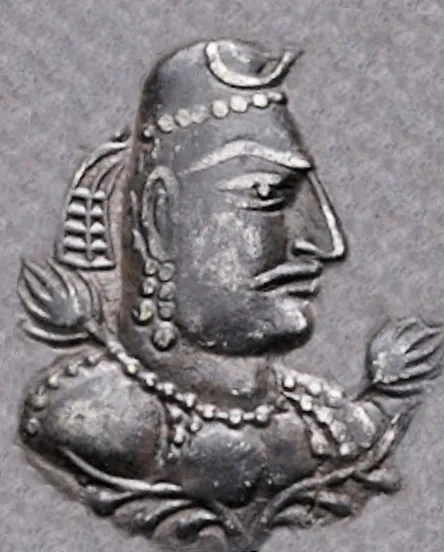
The Alchon Huns, (Bactrian: αλχον(ν)ο Alkhon(n)o or αλχαν(ν)ο Alkhan(n)o) also known as the Alkhan, Alchono, Alxon, Alkhon, Alakhana, and Walxon, were a nomadic people who established states in Central Asia and the Indian subcontinent during the 4th and 6th centuries CE. They were first mentioned as being located in Paropamisus, and later expanded south-east, into the Punjab and Central India, going as far as Eran and Kausambi. The Alchon invasion of the Indian subcontinent eradicated the Kidarite Huns who had preceded them by about a century, and contributed to the fall of the Gupta Empire, in a sense bringing an end to Classical India. The invasion of India by the Huna peoples follows invasions of the subcontinent in the preceding centuries by the Yavana (Indo-Greeks), the Saka (Indo-Scythians), the Pahlava (Indo-Parthians), and the Kushana (Yuezhi). The Alchon Empire was the second of four major Huna states established in Central Asia and the Indian subcontinent. The Alchon were preceded by the Kidarites and succeeded by the Hephthalites and Nezak Huns in Bactria and the Hindu Kush respectively. The names of the Alchon kings are known from their extensive coinage, Buddhist accounts, and a number of commemorative inscriptions throughout the Indian subcontinent. The Alchons have long been considered a part or a sub-division of the Hephthalites, or as their eastern branch, but are now regarded as a separate entity.
Also on this shelf
Artisanal Talavera of Puebla and Tlaxcala.
Hata no Kawakatsu.
See also
Uncatalogued shelfText from Wikipedia; plate via Wikimedia Commons. Text CC BY-SA 4.0; plate freely licensed (see Commons). Source record. Images and catalogue data are reproduced from open-access collections.