Asian Art
Chinese Islamic architecture
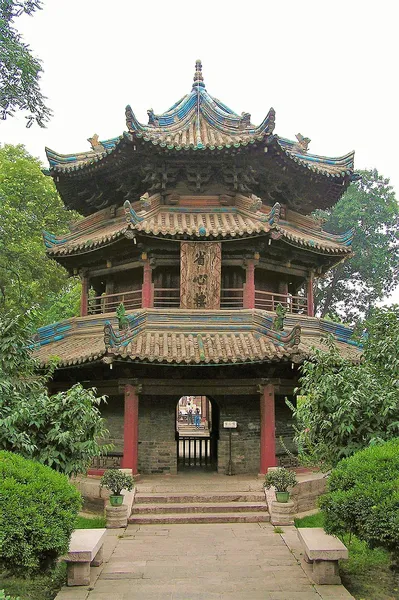
Chinese Islamic architecture, Sino-Islamic architecture, or Islamic architecture of China are terms used to indicate the architectural tradition and cultural heritage of the Muslim populations in China, both of mainland and outer China, which has existed since the 8th century CE to the present. With the acculturation of the Islamic religion within the predominant Han-Chinese culture, a unique architectural style emerged among Chinese Muslims. It became standard for them to incorporate traditional Chinese and Islamic architectural elements together for mosques, prayer halls, mausoleums, and other buildings. Islam has been practiced in Chinese society for 1,300 years. Currently, Chinese Muslims are a minority group in China, representing between 0.45% to 1.8% of the total population according to the latest estimates. Although Hui Muslims are the most numerous group, the greatest concentration of Chinese Muslims are located in Northwestern China, mostly in the autonomous region of Xinjiang, which holds a significant Uyghur population. Lesser but significant Chinese Muslim populations reside in the regions of Ningxia, Gansu, and Qinghai. Of China's 55 officially recognized minority peoples, ten groups are predominantly Sunnī Muslim.
Also on this shelf
Chinese real estate crisis (2020–present).
Buddhism in Afghanistan.
See also
Uncatalogued shelfText from Wikipedia; plate via Wikimedia Commons. Text CC BY-SA 4.0; plate freely licensed (see Commons). Source record. Images and catalogue data are reproduced from open-access collections.