Asian Art
Finnish Civil War
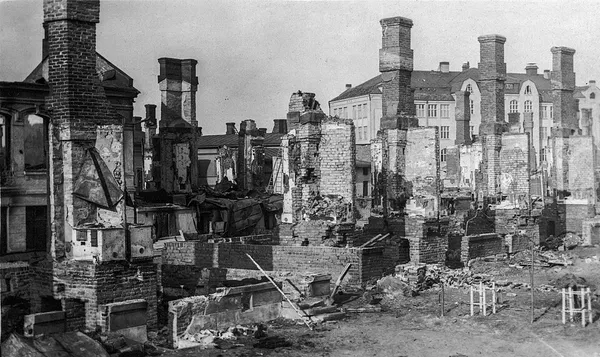
The Finnish Civil War was fought in 1918 for the leadership and control of recently independent Finland (formerly part of Russia) between White Finland and the Finnish Socialist Workers' Republic (Red Finland). The clashes took place in the context of the national, political, and social turmoil caused by World War I (Eastern Front) in Europe. The belligerents were the paramilitary Red Guards, led by a section of the Social Democratic Party with backup of the Russian bolsheviks, and the paramilitary White Guards of the senate. General C. G. E. Mannerheim led the White Guards with major assistance by both the Finnish Jäger Battalion trained in Germany and from March-April 1918 by the German Imperial Army, along the German goal to control Fennoscandia and Petrograd of Russia. The Reds, composed of industrial and agrarian working class people, controlled the cities and industrial centres of southern Finland. The Whites, composed of land owners and the middle and upper class, controlled the rural central and northern Finland. In the years before the civil war, Finland had experienced rapid population growth, industrialisation, gradually increasing urbanisation and the rise of a comprehensive labour movement. The country's political and governmental systems were in an unstable phase of democratisation and modernisation. The socio-economic condition and education of the population had gradually improved, and national awareness and culture had progressed. World War I led to the collapse of the Russian Empire, causing a power vacuum in Finland, and the subsequent struggle for dominance led to militarisation and an escalating crisis between the left-leaning labour movement and the conservatives. The Reds carried out an unsuccessful general offensive in February 1918, supplied with weapons by Soviet Russia. A counteroffensive by the Whites began in March, reinforced by the German Empire's military detachments in April. The decisive engagements were the Battles of Tampere and Viipuri, won by the Whites, and the Battles of Helsinki and Lahti, won by German troops, leading to overall victory for the Whites and the German forces. Political violence became a part of this warfare with around 12,000 casualties - most of them were Reds. Moreover, about 12,500 Red prisoners died of malnutrition and disease in camps.
Also on this shelf
Guru Arjan.
Guangxi.
See also
Uncatalogued shelfText from Wikipedia; plate via Wikimedia Commons. Text CC BY-SA 4.0; plate freely licensed (see Commons). Source record. Images and catalogue data are reproduced from open-access collections.