Asian Art
Dabei Chan
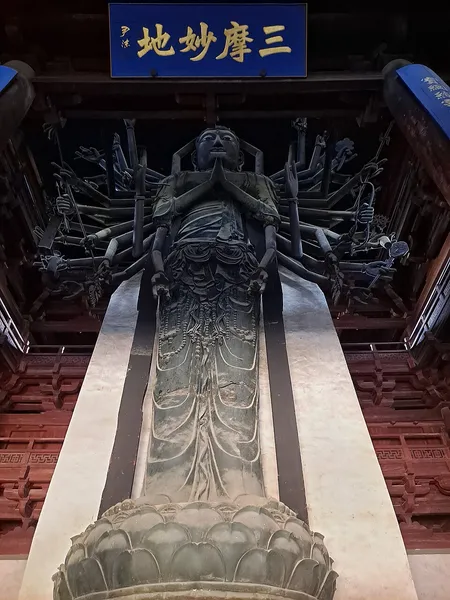
The Dabei Chan (Chinese: 大悲懺; lit. 'Great Compassion Repentance') is a Chinese Buddhist repentance rite typically performed in order to cleanse one's negative karma, purify the mind and generate merits. The ritual was first composed by the eminent Song dynasty (960-1279) Tiantai Patriarch Siming Zhili (四明知禮, 960–1028) and is based around the Nīlakaṇṭha Dhāraṇī, a mantra that is closely associated with the esoteric thousand-armed and thousand-eyed form of the Bodhisattva Guanyin known as Qianshou Qianyan Guanyin (千手千眼觀音, lit: "Thousand-Armed and Thousand-Eyed Guanyin"). The ritual liturgy received further edits and addendums in later periods, most notably by the Vinaya master Jianyue Duti (見月讀體, 1601–1679) during the Qing dynasty. In modern times, this rite remains one of the most popular rites in the Chinese Buddhist ritual field, being performed at least once a month or more in most Chinese Buddhist temples, both on its own and as part of larger events such as the Shuilu Fahui ceremony.
Also on this shelf
Chinese dragon.
History of the Jews in Hong Kong.
See also
Uncatalogued shelfText from Wikipedia; plate via Wikimedia Commons. Text CC BY-SA 4.0; plate freely licensed (see Commons). Source record. Images and catalogue data are reproduced from open-access collections.