Asian Art
Crickets as pets
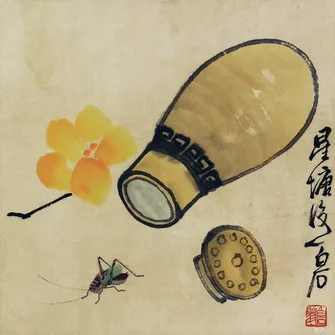
Keeping crickets as pets emerged in China in early antiquity. Initially, crickets were kept for their "songs" (stridulation). In the early 12th century, the Chinese people began holding cricket fights. Throughout the Imperial era the Chinese also kept pet cicadas and grasshoppers, but crickets were the favorites in the Forbidden City and with the commoners alike. The art of selecting and breeding the finest fighting crickets was perfected during the Qing dynasty and remained a monopoly of the imperial court until the beginning of the 19th century. The Imperial patronage promoted the art of making elaborate cricket containers and individual cricket homes. Traditional Chinese cricket homes come in three distinct shapes: wooden cages, ceramic jars, and gourds. Cages are used primarily for trapping and transportation. Gourds and ceramic jars are used as permanent cricket homes in winter and summer, respectively. They are treated with special mortar to enhance the apparent loudness and tone of a cricket's song. The imperial gardeners grew custom-shaped molded gourds tailored to each species of cricket. Their trade secrets were lost during the Chinese Civil War and the Cultural Revolution, but crickets remain a favorite pet of the Chinese to the present day. The Japanese pet cricket culture, which emerged at least a thousand years ago, has practically vanished during the 20th century. Chinese cricket culture and cricket-related business is highly seasonal. Trapping crickets in the fields peaks in August and extends into September. The crickets soon end up at the markets of Shanghai and other major cities. Cricket fighting season extends until the end of autumn, overlapping with the Mid-Autumn Festival and the National Day. Chinese breeders are striving to make cricket fighting a year-round pastime, but the seasonal tradition prevails. Modern Western sources recommend keeping pet crickets in transparent jars or small terrariums providing at least two inches of soil for burrowing and containing egg-crate shells or similar objects for shelter. A cricket's life span is short: Development from an egg to imago takes from one to two months. The imago then lives for around one month. Cricket hobbyists have to frequently replace aging insects with younger ones which are either specifically bred for cricket fighting or caught in the wild.
Also on this shelf
History of the Jews in Wales.
Chair.
See also
Uncatalogued shelfText from Wikipedia; plate via Wikimedia Commons. Text CC BY-SA 4.0; plate freely licensed (see Commons). Source record. Images and catalogue data are reproduced from open-access collections.