Asian Art
Fatimid Caliphate
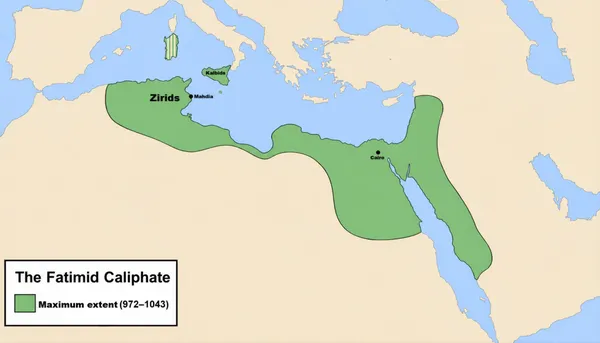
The Fatimid Caliphate (; Arabic: الخلافة الفاطمیّة, romanised: al-Khilāfa al-Fāṭimiyya), also known as the Fatimid Empire, was a caliphate that existed from the tenth to the twelfth centuries CE under the rule of the Fatimids, an Isma'ili Shi'a dynasty. Spanning a large area of North Africa and West Asia, it ranged from the western Mediterranean in the west to the Red Sea in the east. The Fatimids traced their ancestry to the Islamic prophet Muhammad's daughter Fatima and her husband Ali, considered the first Imam of Shi'a Islam. The Fatimids were acknowledged as the rightful imams by different Isma'ili communities as well as by denominations in many other Muslim lands and adjacent regions. Starting in Ifriqiya under the Aghlabids, who were themselves nominally under the Abbasid Caliphate, the Fatimids eventually overthrew both, and extended their rule across the Mediterranean coast, ultimately making Egypt the centre of their caliphate. At its height, the caliphate included—in addition to Egypt—varying areas of the Maghreb, Sicily, the Levant, and the Hejaz. Between 902 and 909, the foundation of the Fatimid state was realised under the leadership of da'i (missionary) Abu Abdallah, who led Kutama tribal forces in establishing an Isma'ili state and then conquering Aghlabid Ifriqiya, thus paving the way for the establishment of the Caliphate. After the conquest, Abdallah al-Mahdi Billah was retrieved from his temporary residence in Sijilmasa, a remote Moroccan city at the edge of the Sahara, and then accepted as the Imam of the movement, becoming the first Caliph and the founder of the dynasty in 909. In 921, the city of al-Mahdiyya was established on the coast of modern-day Tunisia as the capital. In 948, the capital was shifted their to al-Mansuriyya, near Kairouan, also in modern-day Tunisia. In 969, during the reign of al-Mu'izz, the Fatimids conquered Egypt, and in 973, the center of the caliphate was moved to the newly founded Fatimid capital of Cairo. Egypt became the political, cultural, and religious centre of the empire and it developed a new and "indigenous Arabic culture". After its initial conquests, the caliphate often allowed a degree of religious tolerance towards non-Shi'a sects of Islam, as well as to Jews and Christians.
Also on this shelf
Hatakeyama Shigetada.
Imelda Marcos.
See also
Uncatalogued shelfText from Wikipedia; plate via Wikimedia Commons. Text CC BY-SA 4.0; plate freely licensed (see Commons). Source record. Images and catalogue data are reproduced from open-access collections.