Asian Art
Chinese hairpin
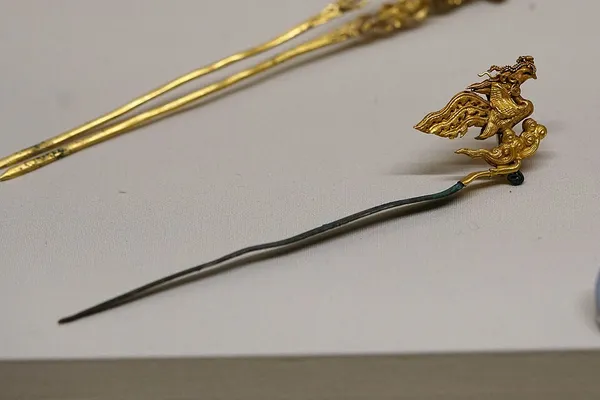
Ji (Chinese: 筓; pinyin: jī) (also known as fàzān (髮簪), zānzi (簪子) or zān (簪)) and chāi (钗) are generic terms for hairpin in China. Ji (with the same character of 笄) is also the term used for hairpins of the Qin dynasty. The earliest form of Chinese hair stick was found in the Neolithic Hemudu culture relics; the hair stick was called ji (笄), and were made from bones, horns, stones, and jade. Hairpins are an important symbol in Chinese culture, and are associated with many Chinese cultural traditions and customs. They were also used as every day hair ornaments in ancient China; all Chinese women would wear a hairpin, regardless of their social rank. The materials, elaborateness of the hairpin's ornaments, and the design used to make the hairpins were markers of the wearer's social status. Hairpins could be made out of various materials, such as jade, gold, silver, ivory, bronze, bamboo, carved wood, tortoiseshell and bone, as well as others. Prior to the establishment of the Qing dynasty, both men and women coiled their hair into a bun using a ji. There were many varieties of hairpin, many having their own names to denote specific styles, such as zan, ji, chai, buyao and tiaoxin.
Also on this shelf
Great Ming Treasure Note.
Chinese Civil War.
See also
Uncatalogued shelfText from Wikipedia; plate via Wikimedia Commons. Text CC BY-SA 4.0; plate freely licensed (see Commons). Source record. Images and catalogue data are reproduced from open-access collections.