Asian Art
History of Uzbekistan
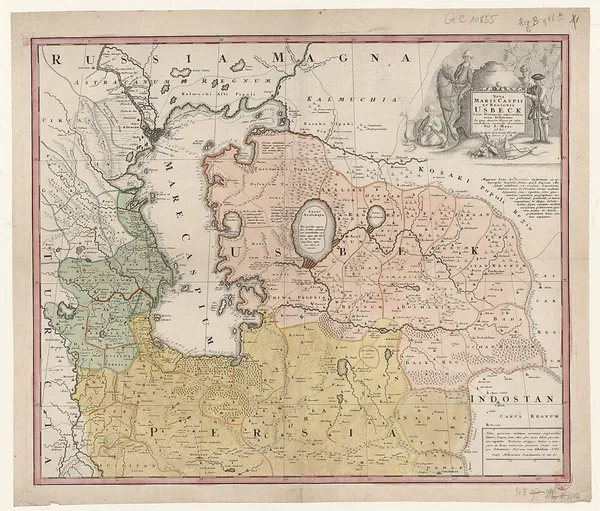
Uzbekistan is a landlocked country in Central Asia. It is itself surrounded by five landlocked countries: Kazakhstan to the north; Kyrgyzstan to the northeast; Tajikistan to the southeast; Afghanistan to the south, Turkmenistan to the south-west. Its capital and largest city is Tashkent. Uzbekistan is part of the area known as Turkestan as well as a member of the Organization of Turkic States and TÜRKSOY. Its majority native and titular ethnic group are the Uzbek people, a Turkic people. While the Uzbek language, a Turkic language, is the majority native and spoken language in Uzbekistan, Russian, a foreign language, is widely used as an inter-ethnic tongue and in government due to the country's Soviet and Russian Imperial past. Russians also form a significant minority ethnic group. Additionally, there are significant Tajik, Karakalpak, and Kazakh minorities, along with numerous smaller groups. Islam is the majority religion in Uzbekistan, most Uzbeks being Sunni Muslims. In ancient times it largely overlapped with the regions known as Sogdia, Bactria, Khwarazm, Transoxiana, and Khorasan. The first people recorded in Central Asia were Scythians who came from the northern grasslands of what is now Uzbekistan, sometime in the first millennium BC; when these nomads settled in the region they built an extensive irrigation system along the rivers. At this time, cities such as Bukhoro (Bukhara) and Samarqand (Samarkand) emerged as centres of government and high culture. By the mid-1st Millennium BC, the Bactrian, Sogdian, and Khwarezmian peoples dominated what is now Uzbekistan. Other Iranic peoples, such as the Saka, Yuezhi, Parthians, Persians, and Iranian Huns would later migrate into and control these territories, in addition to Non-Iranic peoples such as the Greeks and Göktürks, prior to the advent of Islam. As China began to develop its silk trade with the West, Iranian cities took advantage of this commerce by becoming centres of trade. Using an extensive network of cities and rural settlements the Sogdian intermediaries became the wealthiest of these Iranian merchants. As a result of this trade on what became known as the Silk Road, Bukhara, Samarkand and Khiva eventually became extremely wealthy cities, and at times Transoxiana (Mawarannahr) was one of the most influential and powerful Persian provinces of antiquity.
Also on this shelf
Culture of the Ming dynasty.
Hòn non bộ.
See also
Uncatalogued shelfText from Wikipedia; plate via Wikimedia Commons. Text CC BY-SA 4.0; plate freely licensed (see Commons). Source record. Images and catalogue data are reproduced from open-access collections.