Asian Art
Chinese burial money
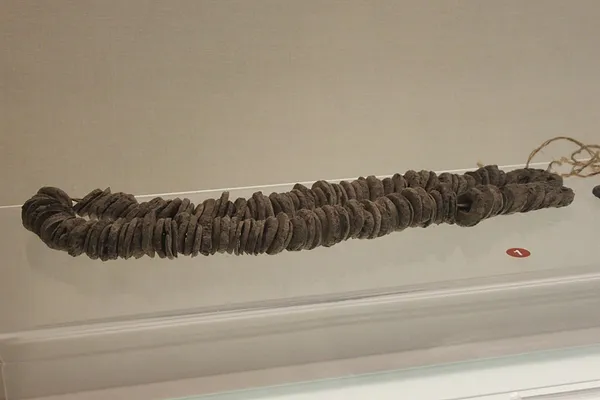
Chinese burial money (traditional Chinese: 瘞錢; simplified Chinese: 瘗钱; pinyin: yì qián) a.k.a. dark coins (traditional Chinese: 冥錢; simplified Chinese: 冥钱; pinyin: míng qián) are Chinese imitations of currency that are placed in the grave of a person that is to be buried. The practice dates to the Shang dynasty when cowrie shells were used, in the belief that the money would be used in the afterlife as a bribe to Yan Wang (also known as Yama) for a more favourable spiritual destination. The practice changed to replica currency to deter grave robbers, and these coins and other imitation currencies were referred to as clay money (泥錢) or earthenware money (陶土幣). Chinese burial money has been discovered dating as far back as 1300 BCE and remained popular throughout Chinese history until the advent of joss paper and hell money during the late 19th century CE.
Also on this shelf
Bada Shanren.
Grid plan.
See also
Uncatalogued shelfText from Wikipedia; plate via Wikimedia Commons. Text CC BY-SA 4.0; plate freely licensed (see Commons). Source record. Images and catalogue data are reproduced from open-access collections.