Asian Art
Abbas II of Persia
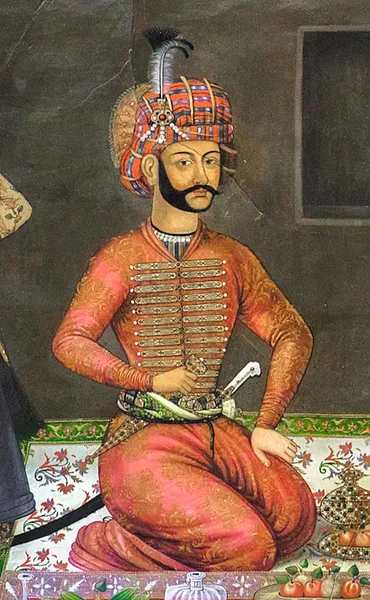
Abbas II (Persian: عباس دوم, romanized: ʿAbbās II; born Soltan Mohammad Mirza; 30 August 1632 – 26 October 1666) was the seventh Shah of Safavid Iran, ruling from 1642 to 1666. As the eldest son of Safi and his Circassian wife, Anna Khanum, he inherited the throne when he was nine, and had to rely on a regency led by Saru Taqi, the erstwhile grand vizier of his father, to govern in his place. During the regency, Abbas received formal kingly education that, until then, he had been denied. In 1645, at age thirteen, he was able to remove Saru Taqi from power, and after purging the bureaucracy ranks, asserted his authority over his court and began his absolute rule. Abbas II's reign was marked by peace and progress. He intentionally avoided a war with the Ottoman Empire and his relations with the Uzbeks in the east were friendly. He enhanced his reputation as a military commander by leading his army during the war with the Mughal Empire and successfully recovering the city of Kandahar. At his behest, Rostom Khan, the King of Kartli and a Safavid vassal, invaded the Kingdom of Kakheti in 1648 and sent the rebellious monarch Teimuraz I into exile. In 1651, Teimuraz tried to reclaim his lost crown with the support of the Russian Tsardom, but the Russians were defeated by Abbas' army in a short conflict fought between 1651 and 1653. The war's major event was the destruction of the Russian fortress on the Iranian side of the Terek river. Abbas also suppressed a rebellion led by the Georgians between 1659 and 1660, in which he acknowledged Vakhtang V as the king of Kartli, but had the rebel leaders executed. From the middle years of his reign onwards, Abbas was occupied with a financial decline which would plague the realm until the end of the Safavid dynasty. In order to increase revenues, in 1654 Abbas appointed Mohammad Beg, a distinguished economist. However, he was unable to overcome the economic decline. Mohammad Beg's efforts often damaged the treasury. He took bribes from the Dutch East India Company and assigned his family members into various positions. In 1661, Mohammad Beg was replaced by Mirza Mohammad Karaki, a weak and ineffective administrator.
Also on this shelf
History of materials science.
History of the Jews in Bosnia and Herzegovina.
See also
Uncatalogued shelfText from Wikipedia; plate via Wikimedia Commons. Text CC BY-SA 4.0; plate freely licensed (see Commons). Source record. Images and catalogue data are reproduced from open-access collections.