Asian Art
Gu Jiegang
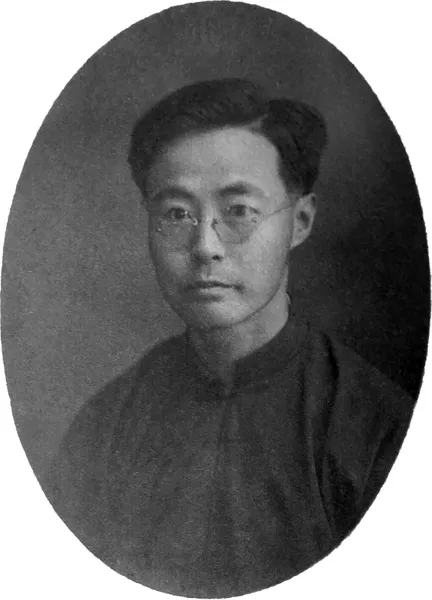
Gu Jiegang (8 May 1893 – 25 December 1980) was a Chinese historian, philologist, and folklorist, noted for his critiques of traditional historiography. Born to a family of scholars in Suzhou, he developed a great interest in philology and the Chinese classics from an early age. He became involved in radical politics following the 1911 Revolution, but grew disillusioned and began to focus on historical studies. He was admitted to Peking University, where became interested in critique of the classical histories, inspired by academics such as Wang Guowei and Hu Shih. After graduating in 1920, he was hired by the university; he became active in the study of folk songs and folklore while continuing his classical philological studies. He initiated a wave of scholarly controversy between the Doubting Antiquity School and conservative academics in 1923 after he published letters criticizing legendary ancient figures such as Emperor Yao and Emperor Shun as unhelpful Confucian myths. He later edited the large volume of responses he received in the aftermath into the first volume of the Gushi Bian (古史辨; 'Debates on Ancient History'), a seven-volume work published from 1926 to 1944. Political and economic tensions forced Gu to leave Beijing in 1926. After only a few months at Xiamen University, where he feuded with novelist Lu Xun, he was employed by his former roommate Fu Ssu-nien at Sun Yat-sen University, where he continued to study folklore while managing a research and history department. He moved to Yenching University in 1929, where he taught philology courses and edited several periodicals, including a historical geography journal he founded with a student. Initially a staunch critic of the Kuomintang's nationalistic view of history, he grew more sympathetic towards it following the outbreak of the Second Sino-Japanese War in 1937 and the university's evacuation to Chongqing. He served in various educational and editorial positions following the war. In 1950, he was forced to condemn his former colleague Hu Shih under pressure from the incipient Communist government; possibly in exchange for his criticism of himself and Hu, he was appointed to head the Institute of History of the Chinese Academy of Sciences in Beijing in 1954. He was condemned during the Cultural Revolution; while nominally still a professor, his position was demoted to janitorial duties.
Also on this shelf
Adi Shankara.
Bhatra Sikhs.
See also
Uncatalogued shelfText from Wikipedia; plate via Wikimedia Commons. Text CC BY-SA 4.0; plate freely licensed (see Commons). Source record. Images and catalogue data are reproduced from open-access collections.