Asian Art
Cundi (Buddhism)
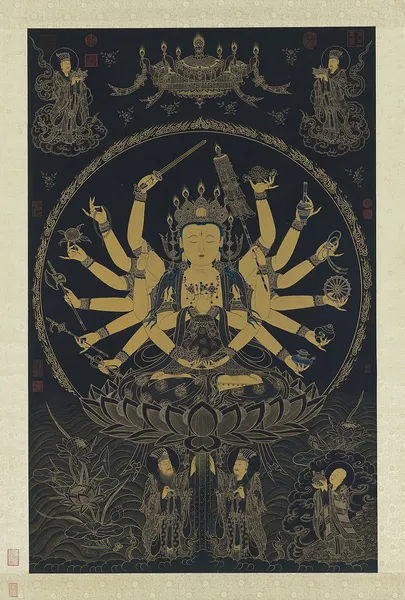
Cundī (Sanskrit, IPA: [t͜ɕʊndiː]; Chinese: 準提; pinyin: Zhǔntí; Japanese: Juntei; Tibetan: ལྷ་མོ་སྐུལ་བྱེད་མ།, Wylie: lha mo skul byed ma, THL: lha-mo kül-jé-ma) or Cundā (IPA: [t͜ɕʊndaː]; Ch: 羅馬化) is a female Indian Buddhist deity who remains popular in East Asian Buddhism. In Chinese Buddhism, she is associated with the practice of the well known Cundī dharani, which is performed along with a specific mudra (hand gesture), as well as the use of a circular mirror. She is considered to be able to purify negative karma, provide protection, support spiritual practice which allows one to quickly attain Buddhahood. This deity is also called by various other names and epithets, including Cundavajrī, Saptakoṭi Buddha-bhagavatī ("The Blessed Buddha of the Seventy Million", 七俱胝佛母), "Zhunti Buddha Mother" (準提佛母, Zhǔntí Fómǔ) in Chinese and Saptakoṭibuddhamatṛ ("Mother of Seventy Million Buddhas", though this Sanskrit reconstruction of 佛母 is speculative). Some depictions of Cundī share many iconographic and symbolic elements with another female Buddhist deity, Prajñāpāramitā Devi. As such, some images of these goddesses are difficult to identify. In Tibetan Buddhism she is known by the name Lhamo Cunda, Chunde or Cundi ('Lhamo' in Tibetan is 'Devi' in Sanskrit, a term of veneration meaning 'goddess').
Also on this shelf
Cash (Chinese coin).
Economic history of Taiwan.
See also
Uncatalogued shelfText from Wikipedia; plate via Wikimedia Commons. Text CC BY-SA 4.0; plate freely licensed (see Commons). Source record. Images and catalogue data are reproduced from open-access collections.