Asian Art
Guanding
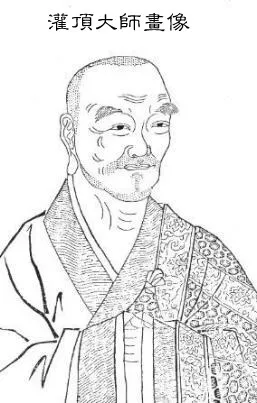
Guanding (灌顶, 561–632 CE), also known as Shi Guanding (釋灌頂), was a Chinese Buddhist monk and exegete during the Sui dynasty (581–618). Guanding is traditionally recognized as the principal disciple and successor of Zhiyi (538–597), the eminent founder of the Tiantai school. He is also traditionally regarded as the fourth patriarch of the Tiantai tradition. Guanding played a decisive role in the preservation, organization, and transmission of Zhiyi's teachings, notably by ensuring that many of his master's oral discourses were systematically recorded and edited into written form. His efforts were instrumental in shaping the doctrinal and institutional legacy of Tiantai Buddhism. Guanding was sometimes referred to by the name of his birthplace, Zhang'an (章安), and is thus often called the Master of Zhang'an (章安大師) or Zhang'an Guanding (章安灌顶) in historical records. Following Zhiyi's death, Guanding assumed responsibility for compiling his master's teachings, especially by writing down the "Three Great Works of Tiantai" (天台三大部), which is considered his major contribution to the establishment of Tiantai doctrine.
Also on this shelf
Da Ke ding.
History of Russia.
See also
Uncatalogued shelfText from Wikipedia; plate via Wikimedia Commons. Text CC BY-SA 4.0; plate freely licensed (see Commons). Source record. Images and catalogue data are reproduced from open-access collections.