Asian Art
Atiśa
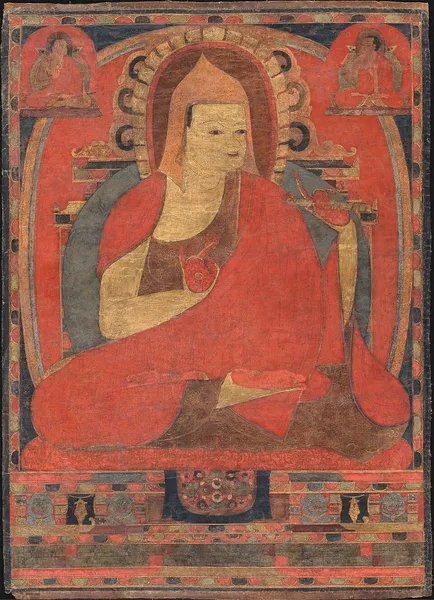
Atiśa Dīpaṃkara Śrījñāna (c. 982–1054 CE) was a Buddhist religious teacher and leader from Bengal. He is generally associated with his body of work authored at Vikramaśīla Monastery in Bihar. He was a major figure in the spread of 11th-century Mahayana and Vajrayana Buddhism in Asia and traveled to Sumatra and Tibet. Atiśa, along with his chief disciple Dromtön, is regarded as the founder of the Kadam school, one of the New Translation schools of Tibetan Buddhism. In the 14th century, the Kadam school was supplanted by the Gelug tradition, which adopted its teachings and absorbed its monasteries.
Also on this shelf
Badami cave temples.
Komainu.
See also
Uncatalogued shelfText from Wikipedia; plate via Wikimedia Commons. Text CC BY-SA 4.0; plate freely licensed (see Commons). Source record. Images and catalogue data are reproduced from open-access collections.