Asian Art
Brahmā (Buddhism)
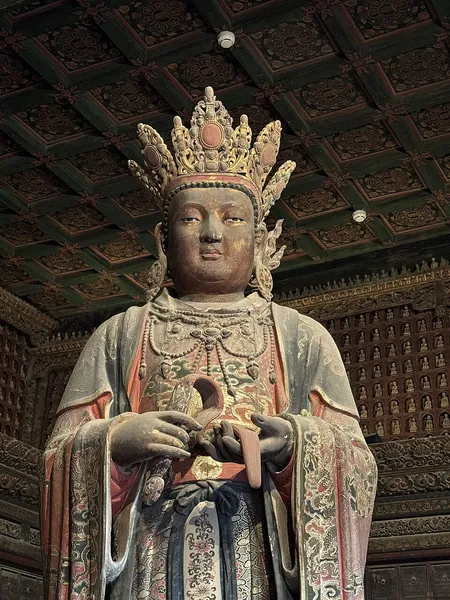
In Buddhist literature a Brahmā (deity or god), refers to a being of the non-sensual world (Brahmaloka), one of the highest realms in Buddhist cosmology. They live in groups often under their chief referred to as Mahābrahmā (The Great God). The texts mention encounters with Mahābrahmā several times and it is not clear if they refer to the same Mahābrahmā or different Mahābrahmās each abiding in their own world. Mahābrahmā is also considered as a protector of teachings (dharmapala), and he is never depicted in early Buddhist texts as a creator god, as is the Brahma of Hinduism. In Buddhist tradition, it was the deity Brahma Sahampati who appeared before the Buddha and invited him to teach, once the Buddha attained enlightenment. Brahmas are represented in Buddhist culture as higher gods with one face, two arms, and two legs with a long beard.
Also on this shelf
Akali movement.
Africa–China relations.
See also
Uncatalogued shelfText from Wikipedia; plate via Wikimedia Commons. Text CC BY-SA 4.0; plate freely licensed (see Commons). Source record. Images and catalogue data are reproduced from open-access collections.