Asian Art
Christianization of the Kingdom of Iberia
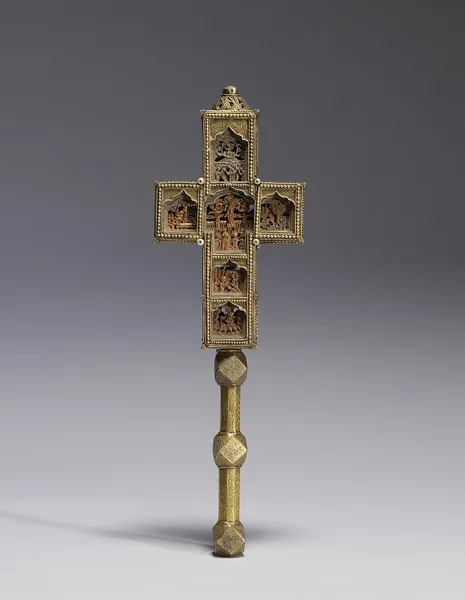
The Christianization of the Kingdom of Iberia (Georgian: ქართლის სამეფოს გაქრისტიანება, romanized: kartlis samepos gakrist'ianeba) refers to the spread of Christianity in the early 4th century as a result of the preaching of Saint Nino in the ancient Georgian kingdom of Kartli, known as Iberia in classical antiquity. The then-pagan king of Iberia Mirian III declared Christianity to be the kingdom's state religion. According to Roman historian Sozomen, this led the king's "large and warlike barbarian nation to confess Christ and renounce the religion of their fathers", as the polytheistic Georgians had long-established anthropomorphic idols, known as the "Gods of Kartli". The king would become the main sponsor, architect, initiator and an organizing power of all building processes. Per Socrates of Constantinople, the "Iberians first embraced the Christian faith" alongside the Abyssinians, but the exact date of the event is still debated. The kings of Georgia and Armenia were among the first monarchs anywhere in the world to convert to the Christian faith. Prior to the escalation of the Armeno-Georgian ecclesiastical rivalry and the Christological controversies, their Caucasian Christianity was extraordinarily inclusive, pluralistic and flexible that only saw the rigid ecclesiological hierarchies established much later, particularly as "national" churches crystallised from the 6th century. Despite the tremendous diversity of the region, the Christianization process was a pan-regional and a cross-cultural phenomenon in the Caucasus, Eurasia's most energetic and cosmopolitan zones throughout the late antiquity, hard enough to place Georgians and Armenians unequivocally within any one major civilization. The Jews of Mtskheta, the royal capital of Kartli which played a significant role in the Christianization of the kingdom, gave a strong impetus to the deepening of ties between the Georgian monarchy and the Holy Land, leading to an increasing presence of Georgians in Palestine. This is confirmed by the activities of Peter the Iberian and other pilgrims, as well as the oldest attested Georgian Bir el Qutt inscriptions found in the Judaean Desert and the Georgian graffiti of Nazareth and Sinai. Iberia was a factor in a competitive diplomacy of the Roman and Sasanian Empires, and on occasion became a major player in proxy wars between the two empires.
Also on this shelf
Hanshan (poet).
Apotheosis.
See also
Uncatalogued shelfText from Wikipedia; plate via Wikimedia Commons. Text CC BY-SA 4.0; plate freely licensed (see Commons). Source record. Images and catalogue data are reproduced from open-access collections.