Asian Art
Fangxiangshi
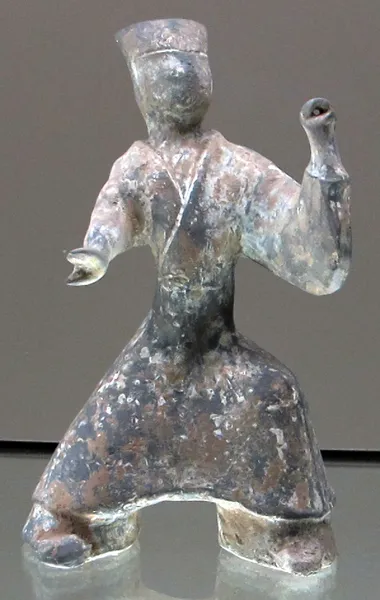
The fangxiangshi (Chinese: 方相氏) or just Fangxiang was a Chinese ritual exorcist. His primary duties were orchestrating the seasonal Nuo ritual to chase out disease-causing demons from houses and buildings, and leading a funeral procession to exorcize corpse-eating wangliang spirits away from a burial chamber. Ancient Chinese texts record that he wore a bearskin with four golden eyes, and carried a lance and shield to expel malevolent spirits. From the Han dynasty through the Tang dynasty (3rd century BCE to 10th century CE), fangxiangshi were official wu-shaman specialists in the imperially sanctioned Chinese state religion; after the Tang, they were adapted into popular folk religion and symbolized by wearing a four-eyed mask. In the present day, the fangxiangshi is a masked character in Chinese Nuo opera, and continues as the Japanese equivalent hōsōshi 方相氏 exorcist in Shinto ceremonies.
Also on this shelf
Dejima.
Iwai Hanshirō VIII.
See also
Uncatalogued shelfText from Wikipedia; plate via Wikimedia Commons. Text CC BY-SA 4.0; plate freely licensed (see Commons). Source record. Images and catalogue data are reproduced from open-access collections.