Asian Art
Edo society
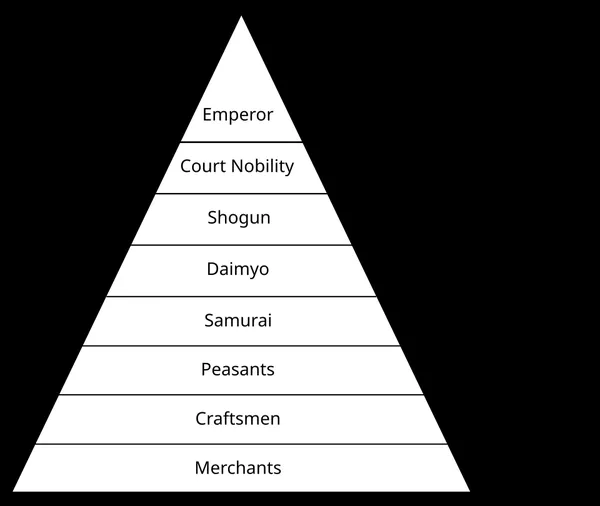
Edo society refers to the society of Japan under the rule of the Tokugawa Shogunate during the Edo period from 1603 to 1868. Edo society was a feudal society with strict social stratification, customs, and regulations intended to promote political stability. The Emperor of Japan and the kuge were the official ruling class of Japan but had no power. The shōgun of the Tokugawa clan, the daimyō, and their retainers of the samurai class administered Japan through their system of domains. The majority of Edo society were commoners divided into peasant, craftsmen, and merchant classes, and various "untouchable" or Burakumin groups. The Tokugawa shogunate ruled by dividing the people into four main categories. Older scholars believed that there were Shi-nō-kō-shō (士農工商, Four Occupations) of "samurai, peasants (hyakushō), craftsmen, and merchants" (chōnin) under the daimyo, with 80% of peasants under the 5% samurai class, followed by craftsmen and merchants. However, various studies have revealed since about 1995 that the classes of peasants, craftsmen, and merchants under the samurai are equal, and the old hierarchy chart has been removed from Japanese history textbooks. In other words, peasants, craftsmen, and merchants are not a social pecking order, but a social classification. The bakumatsu from 1853 on led to growing opposition to the Edo system and it was dismantled after the Meiji Restoration in 1868.
Also on this shelf
Chinese mathematics.
Hebrews.
See also
Uncatalogued shelfText from Wikipedia; plate via Wikimedia Commons. Text CC BY-SA 4.0; plate freely licensed (see Commons). Source record. Images and catalogue data are reproduced from open-access collections.