Asian Art
Bao Zheng
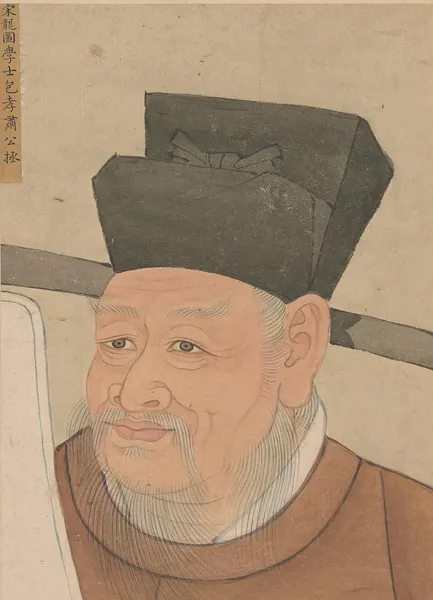
Bao Zheng (包拯; Bāo Zhěng; 5 March 999 – 3 July 1062), commonly known as Bao Gong (包公; Bāo Gōng; 'Lord Bao'), was a Chinese politician during the reign of Emperor Renzong in China's Song Dynasty. During his twenty-five years in civil service, Bao was known for his honesty and uprightness, with actions such as impeaching an uncle of Emperor Renzong's favourite concubine and punishing powerful families. His appointment from 1057 to 1058 as the prefect of Song's capital Kaifeng, where he initiated a number of changes to better hear the grievances of the people, made him a legendary figure. During his years in office, he gained the honorific title Justice Bao (Chinese: 包青天; pinyin: Bāo qīngtiān) due to his ability to defend peasants and commoners against corruption or injustice. Bao Zheng is depicted as the incarnation of the Astral God of Civil Arts (Wenquxing, 文曲星), while famous Northern Song warrior Di Qing is depicted as the Astral God of Military Arts (Wuquxing, 武曲星). Bao Zheng today is honored as the cultural symbol of justice in Chinese society. His largely fictionalized gong'an and wuxia stories have appeared in a variety of different literary and dramatic mediums (beginning with The Seven Heroes and Five Gallants), and have enjoyed sustained popularity. In mainstream Chinese mythology, he is often portrayed wearing a judge's zhanjiao futou hat and a crescent moon on his forehead. Some Chinese provinces later deified Judge Bao, equating him to the benevolent war god Guan Gong.
Also on this shelf
Hashimoto Gahō.
Child cannibalism.
See also
Uncatalogued shelfText from Wikipedia; plate via Wikimedia Commons. Text CC BY-SA 4.0; plate freely licensed (see Commons). Source record. Images and catalogue data are reproduced from open-access collections.