Asian Art
Chinese Buddhist canon
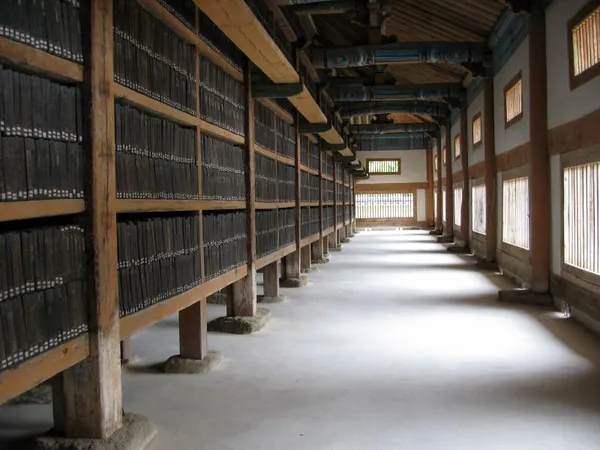
The Chinese Buddhist canon refers to a traditional collection of Chinese language Buddhist texts which are the central canonical works of East Asian Buddhism. The traditional term for the canon is Great Storage of Scriptures (traditional Chinese: 大藏經; simplified Chinese: 大藏经; pinyin: Dàzàngjīng; Japanese: 大蔵経; rōmaji: Daizōkyō; Korean: 대장경; romaja: Daejanggyeong; Vietnamese: Đại tạng kinh). The Chinese canon is a major source of scriptural and spiritual authority for East Asian Buddhism (the Buddhism of China, Korea, Japan and Vietnam). It is also an object of worship and devotion for Asian Buddhists and its reproduction is seen as an act of merit making. The canon has also been called by other names like “Internal Classics” (Chinese: 內典; pinyin: nèidiǎn), “Myriad of Scriptures” (眾經; zhòngjīng), or “All Scriptures” (一切經; yīqièjīng). The development of the Great Storage of Scriptures was influenced by the Indian Buddhist concept of a Tripitaka, literally meaning "three baskets" (of Sutra, Vinaya, and Abhidharma), a term which referred to the scriptural canons of the various Indian Buddhist schools. However, Chinese Buddhists historically did not have access to a single Tripitaka from one school or collection. Instead, the canon grew over centuries as various Indian texts were translated and new texts composed in China. These various works (4,878 individual texts according to the Chinese scholar He Mei) were later collected into a distinct Chinese canon. The language of these scriptures is termed "Buddhist Chinese" (Fojiao Hanyu 佛教漢語), and is a variety of literary Chinese with several unique elements such as a distinctly Buddhist terminology that includes transliterations from Indian languages and newly coined Chinese Buddhist words. The Chinese Buddhist Canon also contains many texts which were composed outside of the Indian subcontinent, including numerous texts composed in China, such as philosophical treatises, commentaries, histories, philological works, catalogs, biographies, geographies, travelogues, genealogies of famous monks, encyclopedias and dictionaries. As such, the Great Storage of Scriptures, the foundation of East Asian Buddhist teachings, reflects the cultural evolution and societal influences that China had on Buddhism over time, and the religious and scholarly efforts of generations of translators, scholars and monastics.
Also on this shelf
Jizhou ware.
Actor Nakamura Shikan II as Satake Shinjuro.
See also
Uncatalogued shelfText from Wikipedia; plate via Wikimedia Commons. Text CC BY-SA 4.0; plate freely licensed (see Commons). Source record. Images and catalogue data are reproduced from open-access collections.