Asian Art
History of Malaysia
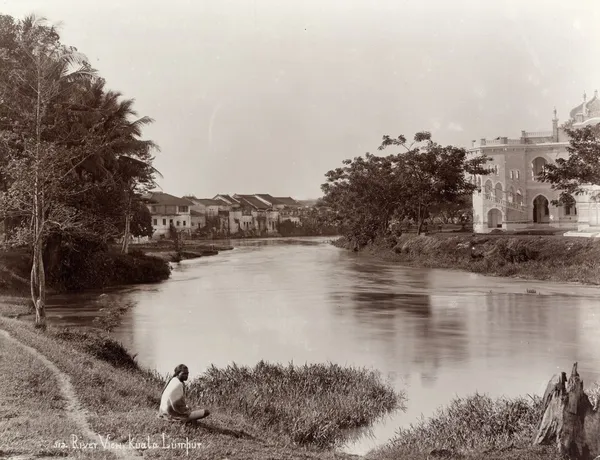
Malaysia is a modern concept, created in the second half of the 20th century. However, contemporary Malaysia regards the entire history of Malaya and Borneo, spanning thousands of years back to prehistoric times, as its own history. Significant events in Malaysia's modern history include the formation of the federation, the separation of Singapore, the racial riots, Mahathir Mohamad's era of modernisation, and the nation's political upheavals of the late 20th and early 21st centuries. The first evidence of archaic human occupation in the region dates back at least 1.83 million years, while the earliest remnants of anatomically modern humans are approximately 40,000 years old. The ancestors of the present-day population of Malaysia entered the area in multiple waves during prehistoric and historical times. Hinduism and Buddhism from India and China dominated early regional history, reaching their peak from the 7th to the 13th centuries during the reign of the Sumatra-based Srivijaya civilisation. Islam made its initial presence in the Malay Peninsula as early as the 10th century, but it was during the 15th century that the religion firmly took root, at least among the court elites, leading to the rise of several sultanates, the most prominent being the Sultanate of Malacca and the Sultanate of Brunei. The Portuguese were the first European colonial power to establish themselves on the Malay Peninsula and in Southeast Asia, capturing Malacca in 1511. This event led to the establishment of several sultanates, such as Johor and Perak. Dutch hegemony over the Malay sultanates increased during the 17th to 18th centuries, with the Dutch capturing Malacca in 1641 with the aid of Johor. In the 19th century, the English ultimately gained hegemony across the territory that is now Malaysia. The Anglo-Dutch Treaty of 1824 defined the boundaries between British Malaya and the Dutch East Indies (which became Indonesia), and the Anglo-Siamese Treaty of 1909 defined the boundaries between British Malaya and Siam (which became Thailand). The fourth phase of foreign influence was marked by a wave of immigration of Chinese and Indian workers to meet the needs created by the colonial economy in the Malay Peninsula and Borneo. The Japanese invasion during World War II ended British rule in Malaya.
Also on this shelf
Japanese bondage.
Finnish Civil War.
See also
Uncatalogued shelfText from Wikipedia; plate via Wikimedia Commons. Text CC BY-SA 4.0; plate freely licensed (see Commons). Source record. Images and catalogue data are reproduced from open-access collections.