Asian Art
Foguang Temple
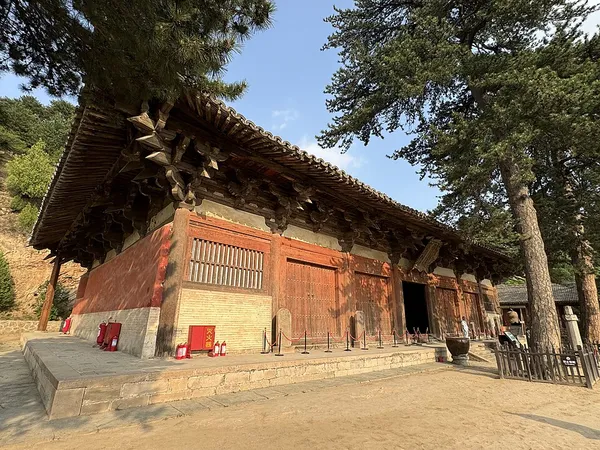
Foguang Temple (Chinese: 佛光寺; lit. "Temple of Buddha's Light") is a Buddhist temple located five kilometres from Doucun Town, Wutai County, Shanxi Province of China. The temple complex covers approximately 8.4 acres and contains over 120 structures dating from the Northern Wei dynasty to the Qing dynasty. The temple is inscribed as part of the Mount Wutai UNESCO World Heritage Site. The major hall of the temple is the Dongda Hall, built in 857 AD, during the Tang dynasty (618–907). It is the third earliest preserved timber structure in China. The Dongda Hall is the only building to contain Tang-dynasty architecture, sculpture, mural painting, and calligraphic inscriptions in a single structure, known as the "Four Supremacies", and the temple is regarded as China's foremost national treasure of ancient architecture. The temple was rediscovered by architectural historians Liang Sicheng and Lin Huiyin in 1937, while an older smaller hall at Nanchan Temple was discovered by the same team a year later. The temple also contains another significant hall dating from 1137 called the Wenshu Hall. The temple grounds also contain one of only two surviving Northern Wei pagodas in China.
Also on this shelf
History of the Jews in Liberia.
History of the Jews in Romania.
See also
Uncatalogued shelfText from Wikipedia; plate via Wikimedia Commons. Text CC BY-SA 4.0; plate freely licensed (see Commons). Source record. Images and catalogue data are reproduced from open-access collections.