Asian Art
Bengal Presidency
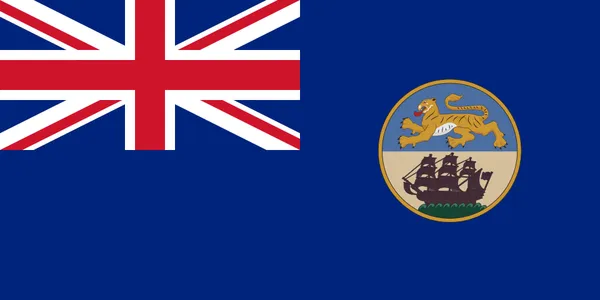
The Bengal Presidency, officially the Presidency of Fort William in Bengal until 1937, later the Bengal Province, was the largest of all three presidencies of British India during Company rule and later a province of British Raj. At the height of its territorial jurisdiction, it covered large parts of what is now South Asia and Southeast Asia. Bengal proper covered the ethno-linguistic region of Bengal (present-day Bangladesh and the Indian state of West Bengal). Calcutta, the city which grew around Fort William, was the capital of the Bengal Presidency. For many years, the governor of Bengal was concurrently the governor-general of India and Calcutta was the capital of India until 1911. The Bengal Presidency emerged from trading posts established in the Bengal Subah of Mughal Empire, during the reign of Emperor Jahangir in 1612. The East India Company (EIC), a British Indian monopoly with a royal charter, competed with other European companies to gain influence in Bengal. In 1757 and 1764, the company defeated the Nawab of Bengal, who acted on Mughal sovereignty, at the Battle of Plassey and the Battle of Buxar, and Bengal came under British influence. In 1765, Emperor Shah Alam II granted revenue rights over Bengal to the company and the judicial rights in 1793. After this, the Bengal province was later merged with the Presidency of Fort William but under the suzerainty of the Emperor until 1835. In 1836, the upper territories of the Bengal Presidency were organised into the Agra Division or North-Western Provinces and administered by a lieutenant-governor within the Presidency. The lower territories were organised into the Bengal Division and put in charge of lieutenant-governor as well in 1853. The office of the governor of the Presidency was abolished and the Presidency existed as only a nominal entity under the dual government of the two lieutenant-governors at Agra and Calcutta. The 1887, the Agra Division was separated from the Presidency and merged with the Oudh province, ending the dual government. In 1912, the governor was restored. In the early 20th century, Bengal emerged as a hotbed of the Indian independence movement and the Bengali Renaissance, as well as a center of education, politics, law, science and the arts.
Also on this shelf
Igagoe vendetta.
Guangxi.
See also
Uncatalogued shelfText from Wikipedia; plate via Wikimedia Commons. Text CC BY-SA 4.0; plate freely licensed (see Commons). Source record. Images and catalogue data are reproduced from open-access collections.