Asian Art
Ghost Festival
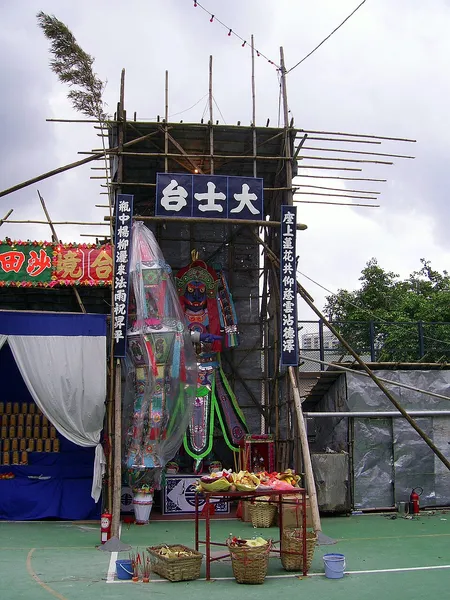
The Ghost Festival or Hungry Ghost Festival, also known as the Zhongyuan Festival in Taoism and the Yulanpen Festival in Buddhism, is a traditional festival held in certain East and Southeast Asian countries. According to the traditional Chinese lunisolar calendar, the Ghost Festival is on the 15th night of the seventh month (14th in parts of southern China). In Chinese culture, the fifteenth day of the seventh month in the traditional Chinese calendar is called Ghost Day or (especially in Taiwan) Pudu (Chinese: 普渡; pinyin: Pǔdù; Pe̍h-ōe-jī: Phó͘-tō͘) and the seventh month is generally regarded as the Ghost Month, in which ghosts and spirits, including those of deceased ancestors, come out from the lower realm (Diyu or Preta). Distinct from both the Qingming Festival (or Tomb Sweeping Day, in spring) and Double Ninth Festival (in autumn) in which living descendants pay homage to their deceased ancestors, during Ghost Festival, the deceased are believed to visit the living. On the fifteenth day the realms of Heaven and Hell and the realm of the living are open, and both Taoists and Buddhists would perform rituals to transmute and absolve the sufferings of the deceased. Intrinsic to the Ghost Month is veneration of the dead, where traditionally the filial piety of descendants extends to their ancestors even after their deaths. Activities during the month would include preparing ritualistic food offerings, burning incense containing Styrax benzoin, and burning joss paper, a papier-mâché form of material items such as clothes, gold, and other fine goods for the visiting spirits of the ancestors. Elaborate meals (often vegetarian) would be served with empty seats for each of the deceased in the family, treating the deceased as if they are still living. Ancestor worship is what distinguishes Qingming Festival from Ghost Festival, because the latter includes paying respects to all deceased, including the same and younger generations, while the former only includes older generations. Other festivities may include buying and releasing miniature paper boats and lanterns on water, which signifies giving directions to the lost ghosts and spirits of the ancestors and other deities.
Also on this shelf
Icheon.
Finnish Civil War.
See also
Uncatalogued shelfText from Wikipedia; plate via Wikimedia Commons. Text CC BY-SA 4.0; plate freely licensed (see Commons). Source record. Images and catalogue data are reproduced from open-access collections.