Asian Art
Dhaka
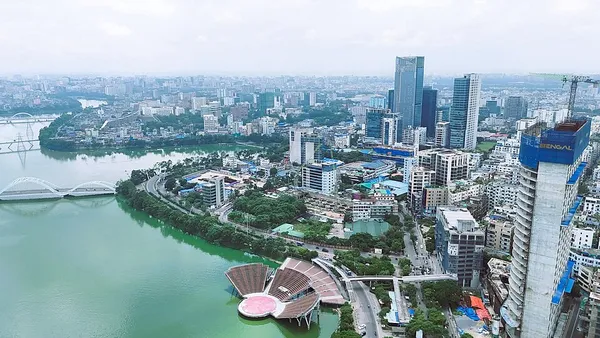
Dhaka ( DAH-kə or DAK-ə; Bengali: ঢাকা, romanized: Ḍhākā, pronounced [ˈɖʱaka] ), formerly spelled as Dacca, is the capital and largest city of Bangladesh. With an estimated population of 36.6 million, Dhaka is the second largest city by population in the world, and is widely considered to be the most densely populated built-up urban area in the world. Dhaka is an important cultural, economic, and scientific hub of Eastern South Asia. Dhaka ranks fourth in South Asia and 55th in the world in terms of GDP. Lying on the Ganges Delta, it is bounded by the Buriganga, Turag, Dhaleshwari and Shitalakshya rivers. It is also the largest Bengali-speaking city in the world. The area of Dhaka has been inhabited since the first millennium. An early modern city developed from the 17th century as a provincial capital and commercial centre of the Mughal Empire. Dhaka was the capital of a proto-industrialized Mughal Bengal for 75 years (1608–39 and 1660–1704). It was the hub of the muslin trade in Bengal and one of the most prosperous cities in the world. The Mughal city was named Jahangirnagar (The City of Jahangir) in honour of the erstwhile ruling emperor Jahangir. The city's wealthy Mughal elite included princes and the sons of Mughal emperors. The pre-colonial city's glory peaked in the 17th and 18th centuries, when it was home to merchants from across Eurasia. The Port of Dhaka was a major trading hub for both riverine and maritime commerce. The Mughals decorated the city with well-laid gardens, tombs, mosques, palaces, and forts. The city was once called the Venice of the East. Under British rule, the city saw the introduction of electricity, railways, cinemas, Western-style universities and colleges, and a modern water supply. It became an important administrative and educational centre in the British Raj, as the capital of Eastern Bengal and Assam province after 1905. In 1947, after the end of British rule, the city became the administrative capital of East Pakistan. The accompanying partition of India saw an emptying of Dhaka's Hindu population—who had come to constitute a majority in the city during the previous century, and dominated its economy. It was declared the legislative capital of Pakistan in 1962. In 1971, following the Liberation War, it became the capital of an independent Bangladesh.
Also on this shelf
Stoke-on-Trent.
Guang (vessel).
See also
Uncatalogued shelfText from Wikipedia; plate via Wikimedia Commons. Text CC BY-SA 4.0; plate freely licensed (see Commons). Source record. Images and catalogue data are reproduced from open-access collections.