Asian Art
Khitan people
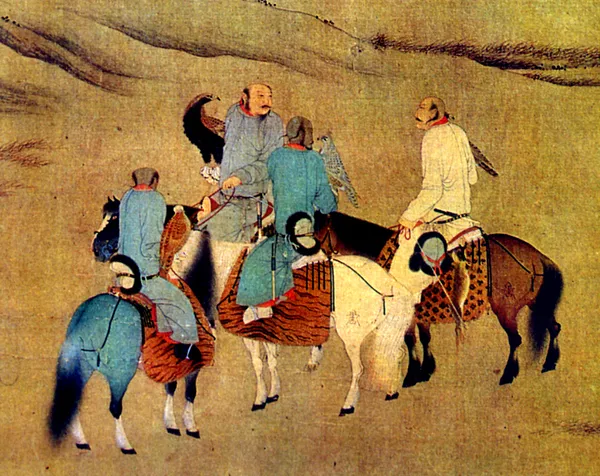
The Khitan people (Khitan small script: ; Chinese: 契丹; pinyin: Qìdān; Old Turkic: 𐰶𐰃𐱃𐰪, romanized: Qïtań) were a historical nomadic people from East Asia and parts of North Asia who, from the 4th century, inhabited an area corresponding to parts of modern Mongolia, Northeast China, and the Russian Far East. As a people descended from the proto-Mongols through the Xianbei, Khitans spoke the now-extinct Khitan language, a Para-Mongolic language related to the Mongolic languages. The Khitan people founded and led the Liao dynasty (916–1125), which dominated a vast area of Siberia, Mongolia and Northern China. The Khitans of the Liao dynasty used two independent writing systems for their language: Khitan small script and Khitan large script. After the fall of the Liao dynasty in 1125 following the Jurchen invasion, many Khitans followed Yelü Dashi's group westward to establish the Qara Khitai or Western Liao dynasty, in Central Asia, which lasted nearly a century before falling to the Mongol Empire in 1218. Other regimes founded by the Khitans included the Northern Liao, Eastern Liao, and Later Liao in China, as well as the Qutlugh-Khanid dynasty in Persia. The modern-day Daur people, a recognized minority ethnic group in Northeast China, are the genetic descendants of Khitans. The historical European name for China, Cathay, originates from the word Khitan.
Also on this shelf
1602.
Asia–France relations.
See also
Uncatalogued shelfText from Wikipedia; plate via Wikimedia Commons. Text CC BY-SA 4.0; plate freely licensed (see Commons). Source record. Images and catalogue data are reproduced from open-access collections.