Asian Art
Economy of Taiwan
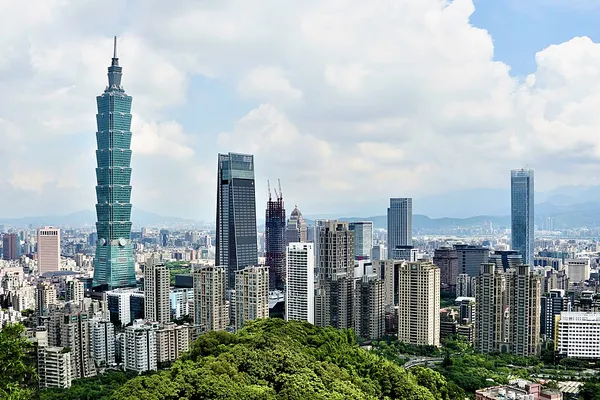
Taiwan has a highly developed free-market economy. It is the 22nd-largest in the world by nominal GDP and 20th-largest by purchasing power parity. Its GDP per capita (PPP) ranks highly at 8th in the world, while its nominal GDP per capita is 30th in the world. This large purchasing power parity adjustment has been attributed to Taiwan's localized supply chains, relatively low cost of living, and in particular to accusations that the New Taiwan dollar is systemically undervalued through currency interventions, although the Central Bank of the Republic of China (Taiwan) has denied these claims. Taiwan is included in the advanced economies group by the International Monetary Fund, and in the high-income economies group by the World Bank. During Dutch and Qing rule, Taiwan primarily exported agricultural goods like rice, sugar, and tea. During the period of Japanese colonization, Taiwan's agricultural exports benefited from electrification, railroads, and irrigation infrastructure. After 1949, the Kuomintang (KMT) instituted large-scale land reforms, turning farmer-renters into landowners. The resulting surplus in agricultural yields, as well as rising rural incomes, laid the groundwork for Taiwan's urbanization and industrialization in the import-substitution phase. In the subsequent period of export-oriented industrialization from the 1960s to the 1990s, Taiwan experienced rapid economic development from an agriculture-based society to an industrialized, high-income economy. This period of economic growth is also known as the Taiwan Miracle. As of 2025, SMEs provide 80% of all employment opportunities in Taiwan's labor market. After 1945, the Kuomintang limited large private enterprise in order to maintain political power. This provided SMEs the room to grow and take market share. In most sectors, notably in electronics, petrochemicals and textiles, the state provided guidance but did not take any direct ownership. Instead, transnational corporations and local businesses cooperated to provide the capital, technology transfers, and cheap labor underpinning the Taiwan Miracle. Today, Taiwan maintains this same large network of SMEs responsible for the export of downstream products.
Also on this shelf
Education in South Korea.
Censer.
See also
Uncatalogued shelfText from Wikipedia; plate via Wikimedia Commons. Text CC BY-SA 4.0; plate freely licensed (see Commons). Source record. Images and catalogue data are reproduced from open-access collections.