Asian Art
Henri Vever
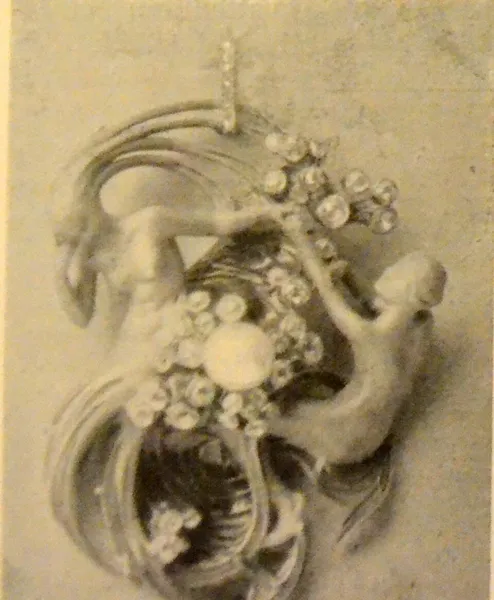
Henri Vever (1854–1942) was one of the most preeminent European jewelers of the early 20th century, operating the family business, Maison Vever, started by his grandfather. Vever's jewelry designs were renowned for their innovative use of enamel and gemstones, drawing significant influence from Japanese art, particularly in his naturalistic motifs. His pieces exhibited at the 1900 Exposition Universelle in Paris solidified his reputation as a master of Art Nouveau jewelry. In collaboration with illustrator Eugène Grasset, Vever created innovative jewelry pieces that received acclaim at the Exposition, including intricate designs inspired by European mythology. Vever was known for his innovative use of precious gemstones, such as rubies, emeralds, and sapphires, in contrast to other Art Nouveau jewelers who favored more affordable materials. Henri was also a collector of a broad range of fine art, including prints, paintings, and books of both European and Asian origin. By the 1880s, Vever became one of the earliest Europeans to formally collect Japanese ukiyo-e woodblock prints, purchasing extensively from dealers such as Hayashi Tadamasa. He was a member of Les Amis de l'Art Japonais, a group of Japanese art enthusiasts including Claude Monet, that met regularly to discuss Japanese prints and other works over dinner. By the early 20th century, Vever had amassed a collection of many thousands of fine ukiyo-e prints. His collection was so well regarded that the authors of some of the pioneering European scholarly works on ukiyo-e used Vever's collection for much their research on actual prints. Such authors include von Seidlitz, Migeon, and Lemoisne, whose L'Estampe Japonaise used Vever's prints exclusively. In 1924, Vever donated approximately a hundred pieces created by Maison Vever along with 250 French jewelry pieces to the Musée des Arts Décoratifs. This donation spanned jewelry from the French Revolution to 1900, underscoring Vever’s dedication to preserving France’s jewelry heritage At the peak of World War I, however, Vever chose (or was forced) to dispose of the bulk of his collection, selling some 7996 prints to the Japanese industrial mogul Matsukata Kōjirō, who purchased them sight-unseen based on the collection's reputation.
Also on this shelf
Foreign relations of China.
Hairstyle.
See also
Uncatalogued shelfText from Wikipedia; plate via Wikimedia Commons. Text CC BY-SA 4.0; plate freely licensed (see Commons). Source record. Images and catalogue data are reproduced from open-access collections.