Asian Art
Conscription
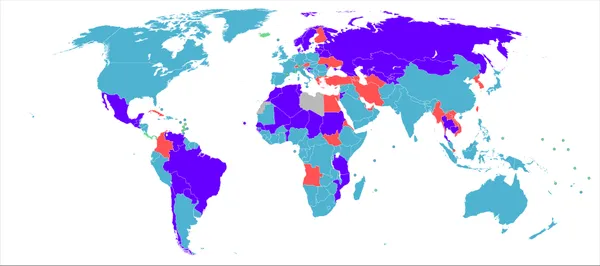
Conscription, also known as the draft in American English and Philippine English, is the practice in which the compulsory enlistment in a national service, mainly a military service, is enforced by law. Conscription dates back to antiquity and it continues in some countries to the present day under various names. The modern system of near-universal national conscription for young men dates to the French Revolution in the 1790s, where it became the basis of a very large and powerful military. Most European nations later copied the system in peacetime, so that men at a certain age would serve 1 to 8 years on active duty and then transfer to the reserve force. Conscription is controversial for a range of reasons, including conscientious objection to military engagements on religious or philosophical grounds; political objection, for example to service for a disliked government or unpopular war; sexism, in that often only men have been or are subject to the draft (in the 2010s, Norway and Sweden became the first nations to conscript women on the same legal terms as men, and in 2025, Denmark ruled to implement a similar system.); and ideological objection, for example, to a perceived violation of individual rights. Those conscripted may evade service, sometimes by leaving the country, and seeking asylum in another country. Some selection systems accommodate these attitudes by providing alternative service outside combat-operations roles or even outside the military, such as siviilipalvelus (alternative civil service) in Finland and Zivildienst (compulsory community service) in Austria and Switzerland. Several countries conscript male soldiers not only for armed forces, but also for paramilitary agencies, which are dedicated to police-like domestic-only service like internal troops, border guards or non-combat rescue duties like civil defence. As of 2025, many states no longer conscript their citizens, relying instead upon professional militaries with volunteers. The ability to rely on such an arrangement, however, presupposes some degree of predictability with regard to both war-fighting requirements and the scope of hostilities. Many states that have abolished conscription still, therefore, reserve the power to resume conscription during wartime or times of crisis.
Also on this shelf
Dalit.
Homosexuality in Japan.
See also
Uncatalogued shelfText from Wikipedia; plate via Wikimedia Commons. Text CC BY-SA 4.0; plate freely licensed (see Commons). Source record. Images and catalogue data are reproduced from open-access collections.