Asian Art
Francisco I. Madero
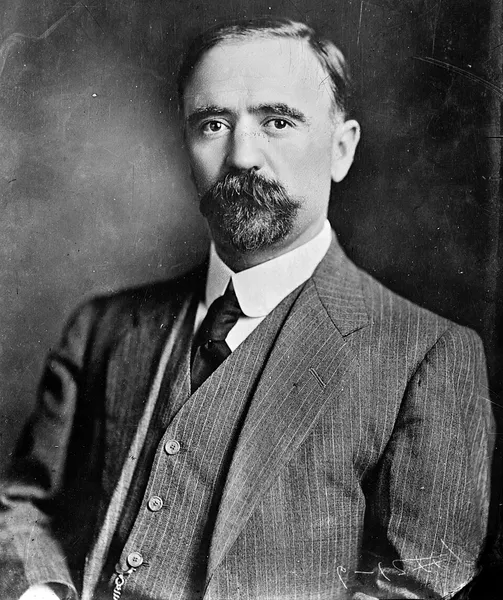
Francisco Ignacio Madero González (Spanish pronunciation: [fɾanˈsisko jɣˈnasjo maˈðeɾo ɣonˈsales]; 30 October 1873 – 22 February 1913) was a Mexican businessman, revolutionary, writer, politician, and statesman who served as the 37th president of Mexico from 1911 until he was deposed and assassinated in a coup d'état in February 1913. He came to prominence as an advocate for democracy and as an opponent of President and dictator Porfirio Díaz. After Díaz claimed to have won the fraudulent election of 1910 despite promising a return to democracy, Madero started the Mexican Revolution to oust Díaz. The Mexican revolution would continue until 1920, well after Madero and Díaz's deaths, with hundreds of thousands dead. A member of one of Mexico's wealthiest families, Madero studied business at the École des Hautes Études Commerciales de Paris. An advocate for social justice and democracy, his 1908 book The Presidential Succession in 1910 called for Mexican voters to prevent the reelection of Porfirio Díaz, whose regime had become increasingly authoritarian. Bankrolling the opposition Anti-Reelectionist Party, Madero's candidacy garnered widespread support in the country. He challenged Díaz in the 1910 election, which resulted in his arrest. After Díaz declared himself winner for an eighth term in a rigged election, Madero escaped from jail, fled to the United States, and called for the overthrow of the Díaz regime in the Plan of San Luis Potosí, sparking the Mexican Revolution. Madero's armed support was concentrated in northern Mexico and was aided by access to arms and finances in the United States. In Chihuahua, Madero recruited wealthy landowner Abraham González to his movement, appointing him provisional governor of the state. González then enlisted Pancho Villa and Pascual Orozco as revolutionary leaders. Madero crossed from Texas into Mexico and took command of a band of revolutionaries, but was defeated in the Battle of Casas Grandes by the Federal Army, which led him to abandon military command roles. Concerned the Battle of Ciudad Juárez would cause casualties in the American city of El Paso and prompt foreign intervention, Madero ordered Villa and Orozco to retreat, but they disobeyed and captured Juárez. Díaz resigned on 25 May 1911 after the signing of the Treaty of Ciudad Juárez and went into exile.
Also on this shelf
Duke of Zhou.
Fasting in Buddhism.
See also
Uncatalogued shelfText from Wikipedia; plate via Wikimedia Commons. Text CC BY-SA 4.0; plate freely licensed (see Commons). Source record. Images and catalogue data are reproduced from open-access collections.