Asian Art
Ash glaze
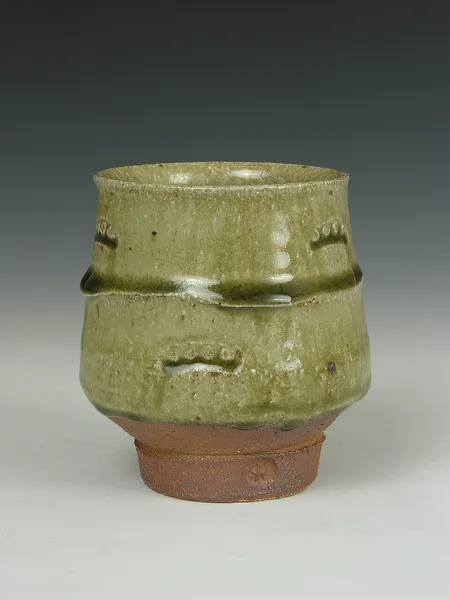
Ash glazes are ceramic glazes made from the ash of various kinds of wood or straw. They have historically been important in East Asia, especially Chinese pottery, Korean pottery, and Japanese pottery. Many traditionalist East Asian potteries still use ash glazing, and it has seen a large revival in studio pottery in the West and East. Some potters like to achieve random effects by setting up the kiln so that ash created during firing falls onto the pots; this is called "natural" or "naturally occurring" ash glaze. Otherwise the ash is mixed with water, and often clay, and applied as a paste. Ash glazing began around 1500 BC, in China during the Shang dynasty, initially by accident as ash from the burnt wood in the kiln landed on pots. Around 1000 BC, the Chinese apparently realized that the ash covering the pieces was causing the glaze so they started adding ash as a glaze before the pot went into the kiln. Ash glaze was the first glaze used in East Asia, and contained only ash, clay, and water. One of the ceramic fluxes in ash glazes is calcium oxide (CaO), commonly known as quicklime, and most ash glazes are part of the lime glaze family, not all of which use ash. In some ash glazes extra lime was added to the ash, which may have been the case with Chinese Yue ware. A relatively high temperature of around 1170 °C is required, high enough to make the body into stoneware or (above about 1200 °C and with the right materials) porcelain.
Also on this shelf
France–Spain relations.
Chinese swordsmanship.
See also
Uncatalogued shelfText from Wikipedia; plate via Wikimedia Commons. Text CC BY-SA 4.0; plate freely licensed (see Commons). Source record. Images and catalogue data are reproduced from open-access collections.