Asian Art
Buddhist temples in Korea
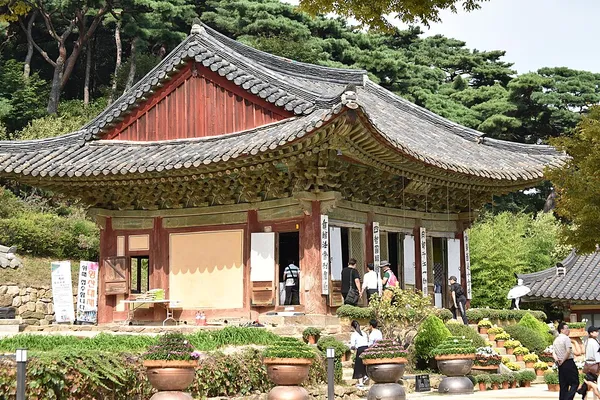
Buddhist temples, called sachal (Korean: 사찰; Hanja: 寺刹), jeol (절), or garam (가람; 伽藍) in Korean, are an important part of Korean architecture. Buddhism was introduced to Korea in the 4th century and the earliest temples were established in Goguryeo in 375. Korean temple architecture developed under the influence of Chinese temples while acquiring distinctive forms over time. Temples of the Three Kingdoms period of Korea had pagoda-and-hall structures while those of Unified Silla had double pagoda structures. Temples expanded in scale and function during the Goryeo dynasty but policies of the Joseon dynasty restricting Buddhism pushed many temples into mountains. Many temples suffered destruction during the Korean War but were subsequently restored. Today, there are approximately 20,000 temples in South Korea and 64 in North Korea. Several Korean temples are designated as UNESCO World Cultural Heritage.
Also on this shelf
Architecture of India.
History of the Jews in Monaco.
See also
Uncatalogued shelfText from Wikipedia; plate via Wikimedia Commons. Text CC BY-SA 4.0; plate freely licensed (see Commons). Source record. Images and catalogue data are reproduced from open-access collections.