Asian Art
Cobalt glass
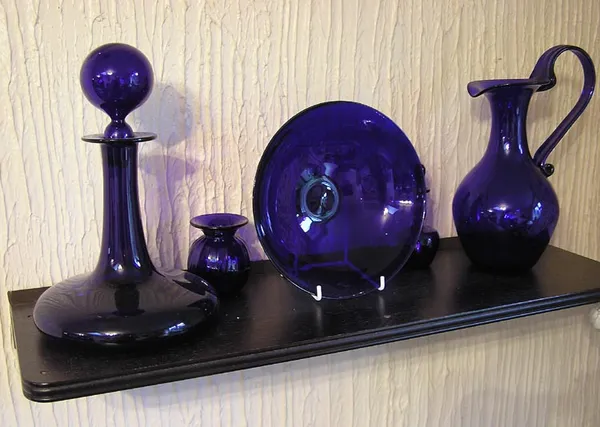
Cobalt glass, also known as "smalt" when ground as a pigment, is a deep blue coloured glass prepared by including a cobalt compound, typically cobalt oxide or cobalt carbonate, in a glass melt. Cobalt is a very intense colouring agent and very little is required to show a noticeable amount of colour. Cobalt glass plates are used as an optical filter in flame tests to filter out the undesired strong yellow light emitted by traces of sodium, and expand the ability to see violet and blue hues, similar to didymium glass. However, didymium glasses are superior for this purpose as it absorbs less light other than the Sodium D lines. Specialty tasting glasses made of cobalt glass are used by professional olive oil tasters to disguise the colour of the oil being assessed to avoid bias in judging. Moderately ground cobalt glass (potassium cobalt silicate)—called "smalt"—has been historically important as a pigment in glassmaking, painting, pottery, for surface decoration of other types of glass and ceramics, and other media. The long history of its manufacture and use has been described comprehensively. Cobalt aluminate, also known as "cobalt blue", can be used in a similar way. Cobalt glass such as Bristol blue glass is appreciated for its attractive colour and is popular with collectors. It is used in the distinctive blue bottles of Harvey's Bristol Cream sherry and Tŷ Nant mineral water.
Also on this shelf
Kraak ware.
History of the Jews in Naples.
See also
Uncatalogued shelfText from Wikipedia; plate via Wikimedia Commons. Text CC BY-SA 4.0; plate freely licensed (see Commons). Source record. Images and catalogue data are reproduced from open-access collections.