Asian Art
Huayan
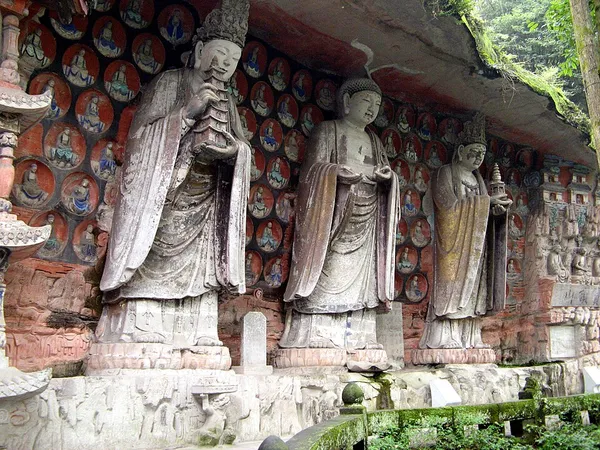
The Huayan school of Buddhism (traditional Chinese: 華嚴; simplified Chinese: 华严; pinyin: Huáyán, Wade–Giles: Hua-Yen, "Flower Garland," from the Sanskrit "Avataṃsaka") is a Mahayana Buddhist tradition that developed in China during the Tang dynasty (618–907). The Huayan worldview is based primarily on the Buddhāvataṃsaka Sūtra (Chinese: 華嚴經; pinyin: Huáyán jīng, Flower Garland Sūtra) as well as on the works of Huayan patriarchs, like Zhiyan (602–668), Fazang (643–712), Chengguan (738–839), Zongmi (780–841) and Li Tongxuan (635–730). Another name for this tradition is the Xianshou school (賢首, Xianshou being another name for patriarch Fazang). The Huayan School is known as Hwaŏm in Korea, Kegon in Japan and Hoa Nghiêm in Vietnam. The Huayan tradition considers the Flower Garland Sūtra to be the ultimate teaching of the Buddha. It also draws on other sources, like the Mahayana Awakening of Faith, and the Madhyamaka and Yogacara philosophies. Huayan teachings, especially its doctrines of universal interpenetration, nature origination (which sees all phenomena as arising from a single ontological source), and the omnipresence of Buddhahood, were very influential on Chinese Buddhism and also on the rest of East Asian Buddhism. Huayan thought was especially influential on Chan (Zen) Buddhism, and some scholars even see Huayan as the main Buddhist philosophy behind Chan/Zen.
Also on this shelf
Architecture of India.
History of the Jews in Monaco.
See also
Uncatalogued shelfText from Wikipedia; plate via Wikimedia Commons. Text CC BY-SA 4.0; plate freely licensed (see Commons). Source record. Images and catalogue data are reproduced from open-access collections.