Asian Art
History of Manila
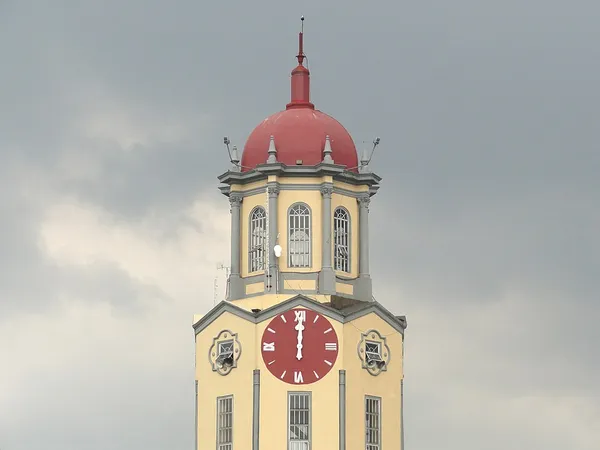
The earliest recorded History of Manila, the capital of the Philippines, dates back to the year 900 AD, as documented in the Laguna Copperplate Inscription. By the thirteenth century, the city consisted of a fortified settlement and trading quarter near the mouth of the Pasig River, which bisects the city into the north and south. Manila became the seat of the Spanish colonial government when Spain gained sovereignty over the Philippine Islands in 1565. The Spanish government was situated within the fortified walls of Old Manila (now referred to as Intramuros, meaning within the walls). The walls were constructed to keep out invading Chinese pirates and protect the city from native uprisings. Several communities eventually grew outside the walls of Manila. The city became the center of trade between Manila and Acapulco, which lasted for three centuries and brought goods from the Americas to Southeast Asia and vice versa. In 1762, the city was captured and occupied by Great Britain for two years as part of the Seven Years' War. The city remained the capital of the Spanish East Indies under the government of the provisional British governor, acting through the Archbishop of Manila and the Real Audiencia. The Spanish military regrouped in Pampanga and continued to harass the British. In 1898, Spain ceded control of the Philippines after over three hundred years of colonial rule to the United States in the Treaty of Paris (1898), which ended the Spanish-American War. During the American Period, city planning using the architectural designs and master plans by Daniel Burnham was done on portions of the city south of the Pasig River. During World War II, much of the city was destroyed during the Battle of Manila (1945), the last of the many battles fought in Manila's history, but the city was rebuilt after the war. It was the second-most destroyed city in the world during World War II, after Warsaw, Poland. The Metropolitan Manila region was enacted as an independent entity in 1975.
Also on this shelf
Finnish Civil War.
Gwalior.
See also
Uncatalogued shelfText from Wikipedia; plate via Wikimedia Commons. Text CC BY-SA 4.0; plate freely licensed (see Commons). Source record. Images and catalogue data are reproduced from open-access collections.