Asian Art
List of National Treasures of Japan (archaeological materials)
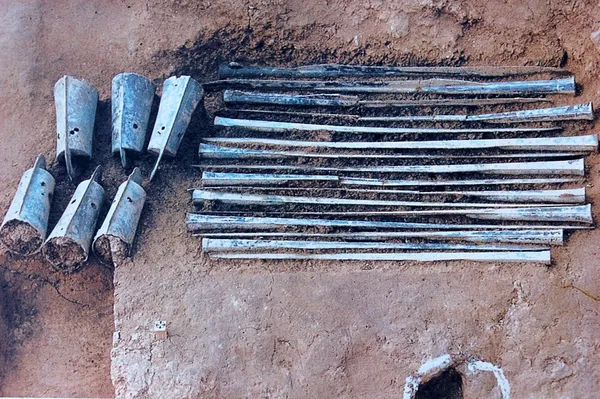
The term "National Treasure" has been used in Japan to denote cultural properties since 1897. The definition and the criteria have changed since the introduction of the term. These archaeological materials adhere to the current definition, and have been designated national treasures since the Law for the Protection of Cultural Properties came into effect on June 9, 1951. The items are selected by the Ministry of Education, Culture, Sports, Science and Technology based on their "especially high historical or artistic value". The list presents 52 materials or sets of materials from ancient to feudal Japan, spanning a period from about 4,500 BC to 1361 AD. The actual number of items is more than 52 because groups of related objects have been combined into single entries. Most of the items have been excavated from tombs, kofun, sutra mounds or other archaeological sites. The materials are housed in museums (34), temples (9), shrines (8) and a university (1) in 27 cities of Japan. The Tokyo National Museum houses the greatest number of archaeological national treasures, with 7 of the 52. The Japanese Paleolithic marks the beginning of human habitation in Japan. It is generally accepted that human settlement did not occur before 38,000 BC, although some sources suggest the date to be as early as 50,000 BC. Archaeological artifacts from the Paleolithic era consist of stone tools of various types, indicative of a hunter-gatherer society. A set of 1965 such tools has been designated as the oldest National Treasure. From about 14,000 to 8,000 BC, the society gradually transformed to one characterized by the creation of pottery used for storage, cooking, bone burial and possibly ceremonial purposes. People continued to subsist on hunting, fishing and gathering, but evidence points to a gradual decrease in the nomadic lifestyle. Potsherds of unornamented pottery from the oldest archaeological sites constitute some of the world's oldest pottery. These are followed by linear-relief, punctated and nail-impressed pottery types. The first cord-marked pottery dates to 8,000 BC. Cord-marked pottery required a technique of pressing twisted cords into the clay, or by rolling cord-wrapped sticks across the clay. The Japanese definition for the period of prehistory characterized by the use of pottery is Jōmon (縄文; lit. cord-patterned) and refers to the entire period (c.
Also on this shelf
Chinese Singaporeans.
Azuchi–Momoyama period.
See also
Uncatalogued shelfText from Wikipedia; plate via Wikimedia Commons. Text CC BY-SA 4.0; plate freely licensed (see Commons). Source record. Images and catalogue data are reproduced from open-access collections.