Asian Art
Catholic Church and the Age of Discovery
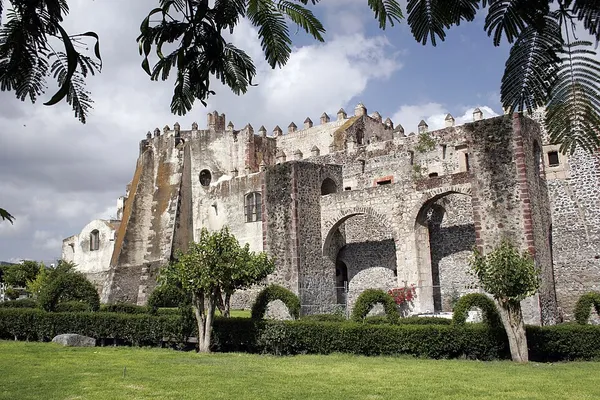
During the Age of Discovery, the Catholic Church inaugurated a major effort to spread Christianity (Catholicism) in the New World, Asia, and Africa, and to convert the Indigenous peoples of the Americas and other indigenous peoples. The evangelical effort was a major part of, and a justification for, the military conquests of European powers such as Portugal, Spain, and France. Christian missions to the indigenous peoples ran hand-in-hand with the colonial efforts of Catholic nations. In the Americas and other colonies in Asia, and Africa, most missions were run by religious orders such as the Franciscans, Dominicans, Augustinians, and Jesuits. In Mexico, the early systematic evangelization by mendicants came to be known as the "Spiritual Conquest of Mexico". Antonio de Montesinos, a Dominican friar on the island of Hispaniola, was the first member of the clergy to publicly denounce all forms of enslavement and oppression of the indigenous peoples of the Americas. Theologians such as Francisco de Vitoria and Bartolomé de las Casas drew up theological and philosophical bases for the defense of the human rights of the colonized native populations, thus creating the basis of international law, regulating the relationships between nations. Important contemporary ecclesiastical documents taking a strong stance on enslaving or despoiling the indigenous peoples of the Americas was the ecclesiastical letter Pastorale officium and the superseding encyclical Sublimis Deus. In the early years, most mission work was undertaken by the religious orders. Over time it was intended that a normal church structure would be established in the mission areas. The process began with the formation of special jurisdictions, known as apostolic prefectures and apostolic vicariates. These developing churches eventually graduated to regular diocesan status with the appointment of a local bishop. After decolonization, this process increased in pace as church structures altered to reflect new political-administrative realities.
Also on this shelf
Celadon.
History of Go.
See also
Uncatalogued shelfText from Wikipedia; plate via Wikimedia Commons. Text CC BY-SA 4.0; plate freely licensed (see Commons). Source record. Images and catalogue data are reproduced from open-access collections.