Asian Art
Azuchi–Momoyama period
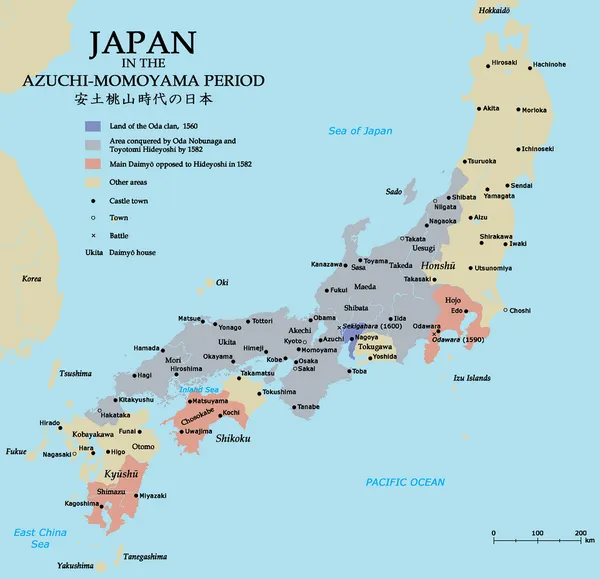
The Azuchi–Momoyama period (安土桃山時代, Azuchi–Momoyama jidai) or Oda-Toyotomi period (織田・豊臣時代) or also Shokuhō period (織豊時代) was the final phase of the Sengoku period (戦国時代, Sengoku jidai) in Japanese history from 1568 to 1603. After the outbreak of the Ōnin War in 1467, the power of the Ashikaga Shogunate effectively collapsed, marking the start of the chaotic Sengoku period. In 1568, Oda Nobunaga entered Kyoto to install Ashikaga Yoshiaki as the 15th and ultimately final Ashikaga shōgun. This entrance marked the start of the Azuchi-Momoyama period. Nobunaga overthrew Yoshiaki and dissolved the Ashikaga Shogunate in 1573, launching a war of conquest to politically unify Japan by force from his base in Azuchi. Nobunaga was forced to commit suicide in the Honnō-ji Incident in 1582. His successor Toyotomi Hideyoshi completed Nobunaga's campaign of unification and enacted reforms to consolidate his rule, marking the end of the Sengoku period. Hideyoshi launched the Japanese invasions of Korea in 1592, but their failure damaged his prestige, and his young son and successor Toyotomi Hideyori was challenged by Tokugawa Ieyasu after Hideyoshi's death in 1598. The Azuchi–Momoyama period ended with the Tokugawa victory at the Battle of Sekigahara in 1600 – unofficially establishing the Tokugawa Shogunate and beginning the Edo period. The Azuchi–Momoyama period encompassed the transition of Japanese society from the pre-modern to the early modern period. The Azuchi–Momoyama period is named after Nobunaga's Azuchi Castle and Hideyoshi's Momoyama Castle, and is also known as the Shokuhō period (織豊時代, Shokuhō jidai) in some Japanese texts, abridged from the surnames of the period's two leaders in on-yomi: Shoku (織) for Oda (織田) plus Hō (豊) for Toyotomi (豊臣).
Also on this shelf
Chang Lee Te-ho.
Feng Zikai.
See also
Uncatalogued shelfText from Wikipedia; plate via Wikimedia Commons. Text CC BY-SA 4.0; plate freely licensed (see Commons). Source record. Images and catalogue data are reproduced from open-access collections.