Asian Art
Burmese calendar
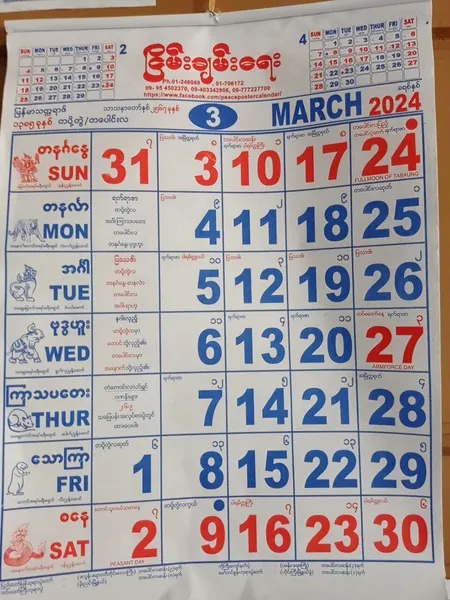
The Burmese calendar (Burmese: မြန်မာသက္ကရာဇ်, pronounced [mjəmà θɛʔkəɹɪʔ], or ကောဇာသက္ကရာဇ်, [kɔ́zà θɛʔkəɹɪʔ]; Burmese Era (BE) or Myanmar Era (ME)) is a lunisolar calendar in which the months are based on lunar months and years are based on sidereal years. The calendar is largely based on an older version of the Hindu calendar, though unlike the Indian systems, it employs a version of the Metonic cycle. The calendar therefore has to reconcile the sidereal years of the Hindu calendar with the Metonic cycle's near tropical years by adding intercalary months and days at irregular intervals. The calendar has been used continuously in various Burmese states since its purported launch in 640 CE in the Sri Ksetra Kingdom, also called the Pyu era. It was also used as the official calendar in other mainland Southeast Asian kingdoms of Rakhine, Lan Na, Chiang Hung, Lan Xang, Siam, and Cambodia down to the late 19th century. Today, the calendar is used in Myanmar as one of the two official calendars alongside the Gregorian calendar. It is still used to mark traditional holidays such as the Burmese New Year, and other traditional festivals, many of which are Burmese Buddhist in nature.
Also on this shelf
Dunhuang manuscripts.
Bengal Subah.
See also
Uncatalogued shelfText from Wikipedia; plate via Wikimedia Commons. Text CC BY-SA 4.0; plate freely licensed (see Commons). Source record. Images and catalogue data are reproduced from open-access collections.