Asian Art
Amoghavajra
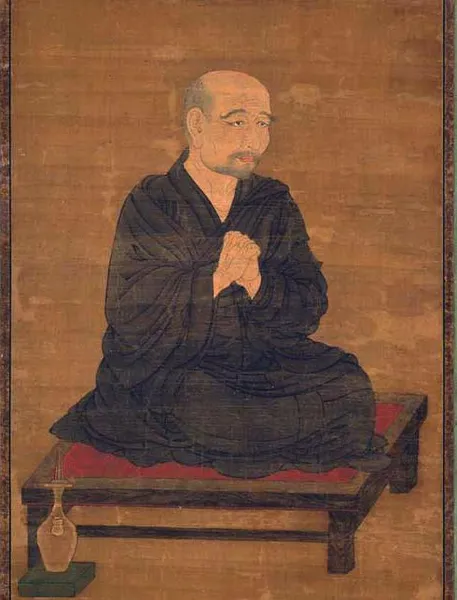
Amoghavajra (Sanskrit: अमोघवज्र, romanized: Amoghavajra; Chinese: 不空; pinyin: Bùkōng; Japanese: Fukū; Korean: 불공; Vietnamese: Bất Không; 705–774), also known in Chinese as Pu-k’ung Chin-kang and in Japanese as Fukū Kongō, was an influential teacher of Esoteric Buddhism in 8th-century China, a prolific translator, and one of the most politically powerful Buddhist monks in Chinese history. He is recognized as a patriarch of Zhenyan Buddhism and Shingon Buddhism, and specifically as the sixth patriarch of the Chinese Chen-yen tradition. Amoghavajra's early life is uncertain, but at about the age of ten he went to Java, and subsequently studied under Vajrabodhi. Together they travelled to China in 720, where they established esoteric Buddhism. From about 740, Amoghavajra spent approximately five years in India, collecting Sanskrit texts. After returning to China, he undertook an extensive programme of translation, ultimately producing more than 100 translated works. His own teaching was based especially on the Vajraśekhara Sūtra, characterized as a wisdom text, and he received imperial support for the construction of temples as well as for his teaching and performance of esoteric rituals. In 765 he was given the title Kuang-chih San-tsang (Japanese: Kōchi Sanzō). Among his pupils was Hui-k'o, who transmitted the teaching to Kūkai and thereby to Japan.
Also on this shelf
Emperor Jimmu.
Foot binding.
See also
Uncatalogued shelfText from Wikipedia; plate via Wikimedia Commons. Text CC BY-SA 4.0; plate freely licensed (see Commons). Source record. Images and catalogue data are reproduced from open-access collections.