Asian Art
Foot binding
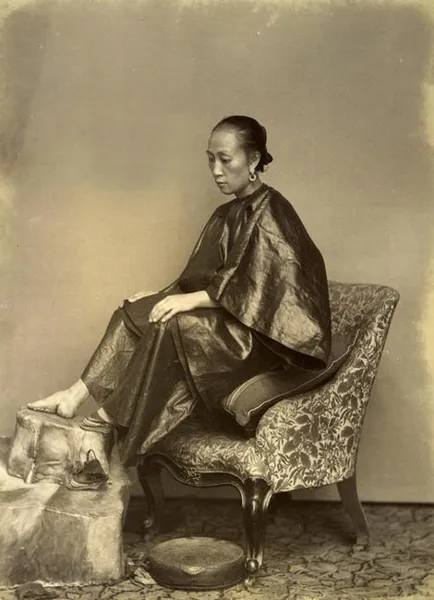
Foot binding (simplified Chinese: 缠足; traditional Chinese: 纏足; pinyin: chánzú), or footbinding, was the Chinese custom of breaking and tightly binding the feet of young girls to change their shape and size. Feet altered by foot binding were known as lotus feet and the shoes made for them were known as lotus shoes. In late imperial China, bound feet were considered a status symbol and a mark of feminine beauty. However, foot binding was a painful practice that limited the mobility of women and resulted in lifelong disabilities. The prevalence and practice of foot binding varied over time, by region, and by social class. The practice may have originated among court dancers during the Five Dynasties and Ten Kingdoms period in 10th-century China and gradually became popular among the elite during the Song dynasty, later spreading to lower social classes by the Qing dynasty (1644–1912). Manchu emperors attempted to ban the practice in the 17th century but failed. In some areas, foot binding raised marriage prospects. It has been estimated that by the 19th century 40–50% of all Chinese women may have had bound feet, rising to almost 100% among upper-class Han Chinese women. Frontier ethnic groups such as Uyghurs, Manchus, Mongols, and Tibetans generally did not practice footbinding. In some regions, Han Chinese influence spread the practice to non-Han women, such as the Hui people. Chinese reformers as well as Christian missionaries challenged the practice in the late 19th century, and the practice began to die out in the early 20th century, following the efforts of anti-foot binding campaigns. Upper-class and urban women dropped the practice sooner than poorer rural women. By 2007, only a handful of elderly Chinese women whose feet had been bound were still alive.
Also on this shelf
Daojiao fushi.
History of Southeast Asia.
See also
Uncatalogued shelfText from Wikipedia; plate via Wikimedia Commons. Text CC BY-SA 4.0; plate freely licensed (see Commons). Source record. Images and catalogue data are reproduced from open-access collections.