Asian Art
Chen Jiru
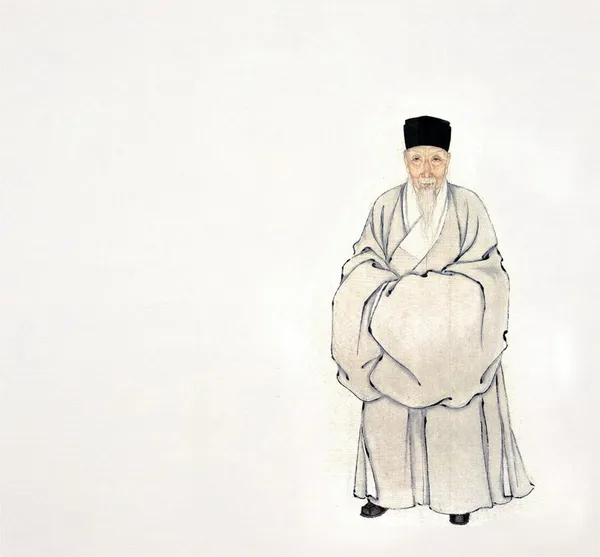
Chen Jiru (simplified Chinese: 陈继儒; traditional Chinese: 陳繼儒; pinyin: Chén Jìrú; Wade–Giles: Ch'en Chi-ju; 1558–1639) was a Chinese landscape painter, calligrapher and essayist during the Ming dynasty (1368–1644). Chen was born in Huating (华亭; present-day Songjiang District, Shanghai). His courtesy name was Zhongchun (仲醇) and his pseudonyms were Migong (麋公) and Meigong (眉公). Chen's calligraphy followed the style of Su Shi and Mi Fu. Chen also painted landscapes and elegant still lifes. In 1595, he wrote Tea Talks (茶董補), still often quoted in China and Japan, and he studied pottery and created purple clay teapots in the Yixing style. His Shallow Comments on the Art of Nourishing Life as well as A Gentleman's Remarks on Diet were a reference for many years. He was a notable author of the xiaopin, a form of short literary essay. Chen Jiru left an autobiography which contains a "patently fictitious account of the circumstances of his own death, a most extraordinary innovation," writes the modern scholar Pei-yi Wu, describing Chen as "a member of the literati known for his versatile artistic talents." In 2007, Jamie Greenbaum, a researcher at the University of Beijing, published a book on Chen Jiru's writings which provides an overview of his larger-than-life personality, as well as an account of the different literary personae he invented.
Also on this shelf
Kyoto.
History of the Jews in Luxembourg.
See also
Uncatalogued shelfText from Wikipedia; plate via Wikimedia Commons. Text CC BY-SA 4.0; plate freely licensed (see Commons). Source record. Images and catalogue data are reproduced from open-access collections.