Asian Art
Chinese knotting
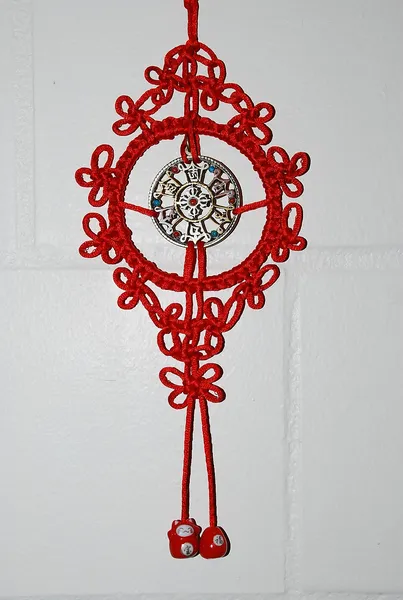
Chinese knotting, also known as zhongguo jie (Chinese: 中國結; pinyin: Zhōngguó jié), is a Chinese folk art with ties to Buddhism and Taoism. A Chinese knot is made from a single length of cord that is woven into different shapes, with each shape having a symbolic meaning. The most common color used in Chinese knotting is red, a color associated with luck in Chinese culture, although any color can be used. Charms, beads, and jade are sometimes incorporated into a Chinese knot. It is believed that Chinese knotting originated for recording information and exchanging messages before writing was commonplace. Traditionally, Chinese knots acted as good-luck charms to ward off evil spirits. Chinese knots are used today to decorate homes during festivities and are also commonly seen in traditional jade jewellery and traditional Chinese clothing.
Also on this shelf
Historiography of India.
Hasegawa Settan.
See also
Uncatalogued shelfText from Wikipedia; plate via Wikimedia Commons. Text CC BY-SA 4.0; plate freely licensed (see Commons). Source record. Images and catalogue data are reproduced from open-access collections.