Asian Art
Europeans in China during the Middle Ages
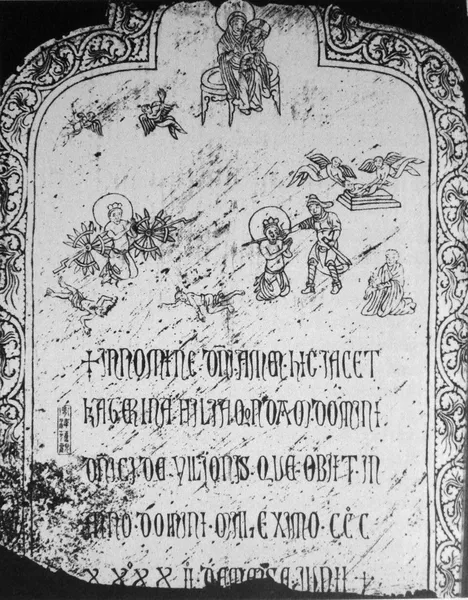
Given textual and archaeological evidence, it is thought that thousands of Europeans lived in Imperial China during the Yuan dynasty. These were people from countries traditionally belonging to the lands of Christendom during the High to Late Middle Ages who visited, traded, performed Christian missionary work, or lived in China. This occurred primarily during the second half of the 13th century and the first half of the 14th century, coinciding with the rule of the Mongol Empire, which ruled over a large part of Eurasia and connected Europe with their Chinese dominion of the Yuan dynasty. Whereas the Byzantine Empire centered in Greece and Anatolia maintained rare incidences of correspondence with the Tang, Song, and Ming dynasties of China, the Holy See sent several missionaries and embassies to the early Mongol Empire as well as to Khanbaliq (modern Beijing), the capital of the Mongol-led Yuan dynasty of China. These contacts with the West were preceded by rare interactions between the Han dynasty and Hellenistic Greeks and Romans. Mainly located in places such as the Yuan capital of Karakorum, European missionaries and merchants traveled around various parts of the Yuan dynasty and other Mongol-ruled khanates during a period of time referred to by historians as the "Pax Mongolica". Perhaps the most important political consequence of this movement of peoples and intensified trade was the Franco-Mongol alliance, although the latter never fully materialized, at least not in a consistent manner. The establishment of the Ming dynasty in 1368 and reestablishment of ethnic Han rule led to the cessation of European merchants and Roman Catholic missionaries living in China. Direct contact with Europeans was not renewed until Portuguese explorers and Jesuit missionaries arrived on Ming China's southern shores in the 1510s, during the Age of Discovery. The Italian merchant Marco Polo, preceded by his father and uncle Niccolò and Maffeo Polo, traveled to China during the Yuan dynasty. Marco Polo wrote a famous account of his travels there, as did the Franciscan friar Odoric of Pordenone and the merchant Francesco Balducci Pegolotti. The author John Mandeville also wrote about his travels to China, but he may have based these on preexisting accounts.
Also on this shelf
Dual wield.
Devrani Jethani Temple Complex.
See also
Uncatalogued shelfText from Wikipedia; plate via Wikimedia Commons. Text CC BY-SA 4.0; plate freely licensed (see Commons). Source record. Images and catalogue data are reproduced from open-access collections.