Asian Art
Bengal Subah
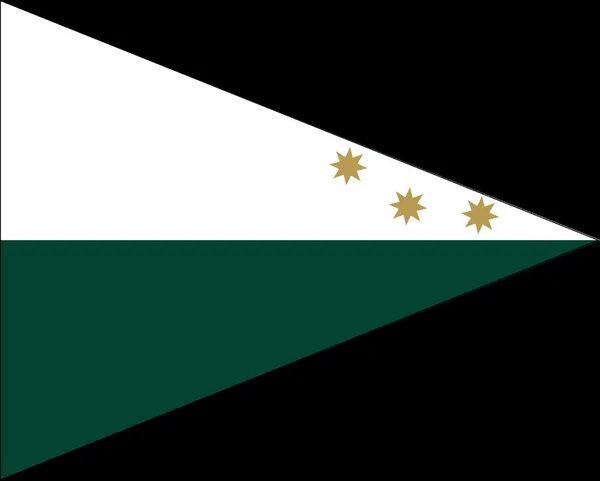
The Bengal Subah (Bengali: সুবাহ বাংলা, Persian: صوبه بنگاله), also referred to as Mughal Bengal and Bengal State (after 1717), was the largest subdivision of the Mughal Empire, encompassing much of the Bengal region, which includes modern-day Bangladesh, the Indian state of West Bengal, and some parts of the present-day Indian states of Bihar, Jharkhand and Odisha between the 16th and 18th centuries. The province was established following the dissolution of the Bengal Sultanate, a major trading nation in the world, when the region was absorbed into the Mughal Empire. Bengal was the wealthiest region in the Indian subcontinent. Aurangzeb (r. 1658–1707) described Bengal Subah as 'the paradise of nations' and the "Golden Age of Bengal". It alone accounted for 40% of Dutch imports from Asia. The eastern part of Bengal was globally prominent in industries such as textile manufacturing and shipbuilding, and it was a major exporter of silk and cotton textiles, steel, saltpeter, and agricultural and industrial produce in the world. The region was also the basis of the Anglo-Bengal War. By the 18th century, Bengal emerged as a de facto independent state under the rule of the Nawabs of Bengal, who acted on Mughal sovereignty. It started to undergo proto-industrialization, making significant contributions to the first Industrial Revolution, especially industrial textile manufacturing. In 1757 and 1764, the British East India Company defeated the Nawab of Bengal at the Battle of Plassey and the Battle of Buxar, and Bengal came under British influence. It was deindustrialized after being conquered by the Company. In 1765, Emperor Shah Alam II granted the office of the Diwani of Bengal (second-highest office in a province, included revenue rights) to the Company and the office of the Nizamat of Bengal (highest office, administrative and judicial rights) in 1793. The Nawab of Bengal, who previously possessed both these offices, was now formally powerless and became a titular monarch.
Also on this shelf
Asian art.
History of Japan–Korea relations.
See also
Uncatalogued shelfText from Wikipedia; plate via Wikimedia Commons. Text CC BY-SA 4.0; plate freely licensed (see Commons). Source record. Images and catalogue data are reproduced from open-access collections.