Art of the Americas
Muisca Confederations (political units)
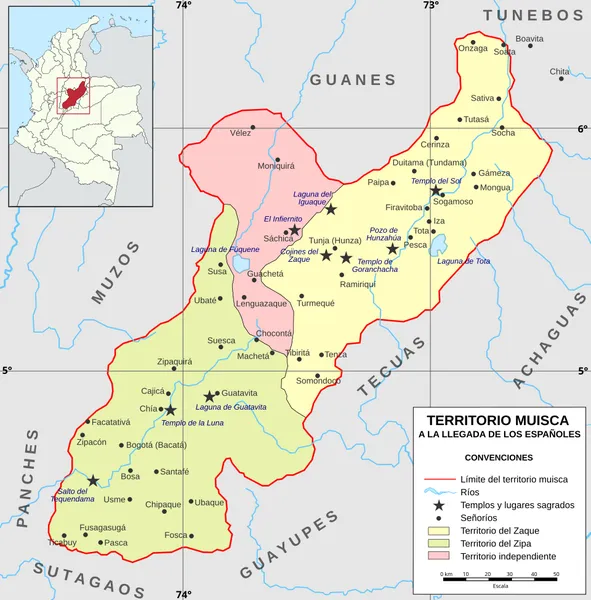
Muisca Confederations were loose confederations of different Muisca chiefdoms in the Eastern Andean highlands of what is today Colombia before the Spanish conquest of northern South America. These unions, centred around main chiefdoms recognised by smaller ones, were not a single, even loose, muisca confederation of chiefdoms, but multiple, independent regional entities. The area, presently called Altiplano Cundiboyacense, comprised the current departments of Boyacá, Cundinamarca and minor parts of Santander. Usually, Muisca chiefdoms were composed of various basic matrilineal units (uta, minor, or sibyn, major) called capitanías by the Spaniards. However, power was based on individual alliances of Muisca rulers with households or basic units. Often, sibyn were villages and uta groups of houses. Four confederations of chiefdoms formed in Muisca territory: Bogotá, Tunja, Duitama and Sogamoso. Additionally, the Chibcha-speaking Guane and Lache were also ruled by the confederation of Guanentá and the confederation of El Cocuy respectively. Different models exist to explain the nature of power among Muisca elites.
Also on this shelf
Enggano people.
Gonzalo Jiménez de Quesada.
See also
Uncatalogued shelfText from Wikipedia; plate via Wikimedia Commons. Text CC BY-SA 4.0; plate freely licensed (see Commons). Source record. Images and catalogue data are reproduced from open-access collections.